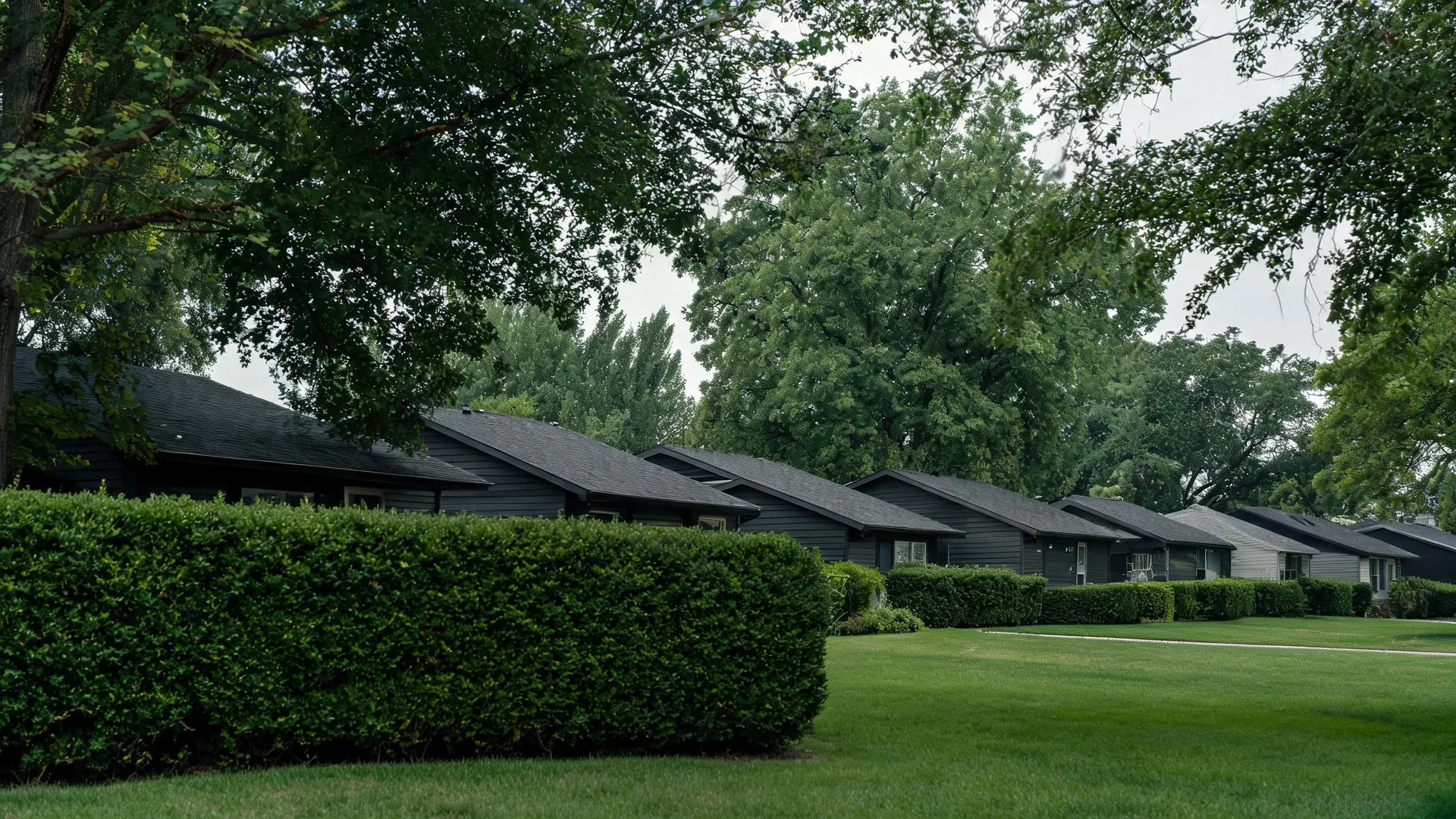


A row of dark-sided single-story houses with gabled shingle roofs behind a long trimmed hedge, with mown lawn in the foreground and large leafy trees overhead under an overcast sky.

Furnace Installation in Bay City, MI

Tell us about the job

Takes about a minute. No obligation.

New system or replacementFurnace or heatingBay County, MI
Step 1 of 2

What ZIP code is the job in?

Your furnace in Bay City runs from October through May. That is eight months of the year it has to work, and overnight lows average 18°F through December, January and February. A furnace sized wrong for that kind of stretch either short cycles or runs flat out trying to keep up, and either way it wears sooner than it should. Getting the size right for your house matters more here than in places where the furnace gets a few easy months to recover. The cheapest unit to install is not always the cheapest to run through a winter like that.

8 months
October through May, your furnace is on duty
18°F
the average winter night it heats against
78%
of homes here heat with gas, so most furnaces here burn gas
80% AFUE
the federal minimum any new unit must meet
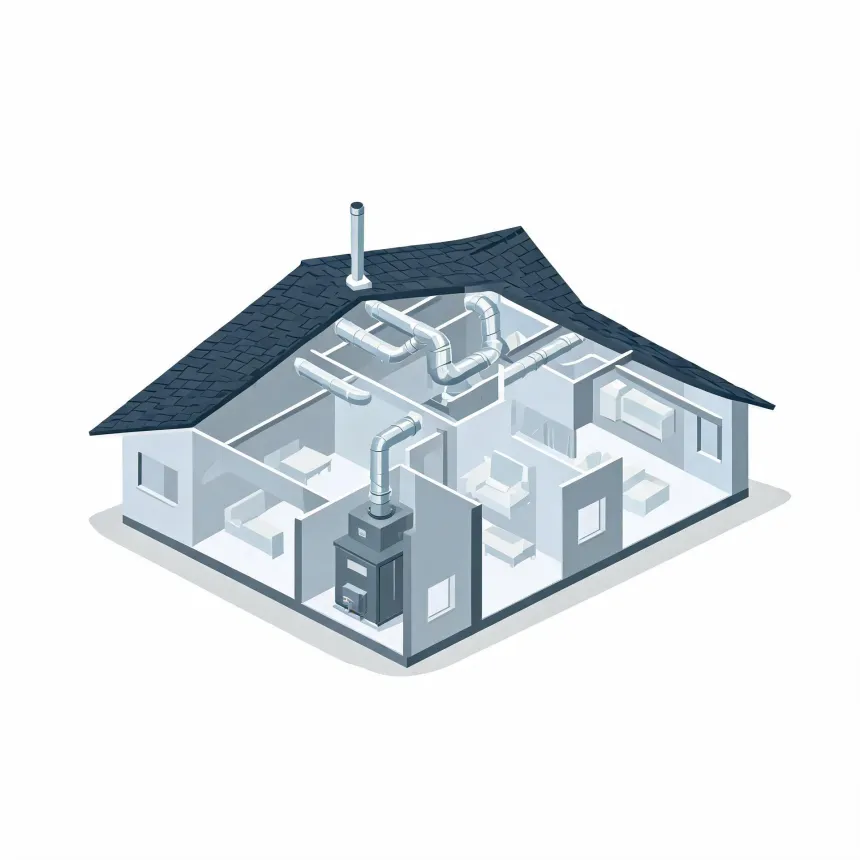
Isometric cutaway illustration of a single-story house showing interior rooms with furniture, a metal ductwork network, and a furnace unit connected to a vertical flue through the dark shingled roof.
Your furnace works hardest from November through March.

NOAA nClimDiv, 1991–2020 normals

Half the homes in Bay County were built in 1963 or earlier.

A furnace going into a house that old has to match the house, not just the floor space.

Replace it in September, before heat season starts in October

Heat runs October through May
Winter nights average 18°F
Climate zone 5A

Gas heats 78 percent of homes in Bay County, and that's not an accident. It's the fuel that keeps up with the kind of winter this county gets, and it's why parts, filters and furnaces built for it are what every supply house here stocks. If your house already runs on gas, replacing the furnace with another gas furnace is the straightforward path. Switching fuels means new venting, maybe new gas lines or new electrical, and a contractor who has to plan around a house built for a different system than the one going in. Electric heat and propane both show up in this county too, mostly in homes where gas line never reached. If that's your situation, say so up front, since it changes what the contractor quotes and what they install.

Size it for how hard it works here

A new system here will work harder than most, every year. Size it right and don't buy on price alone.

Find a contractor
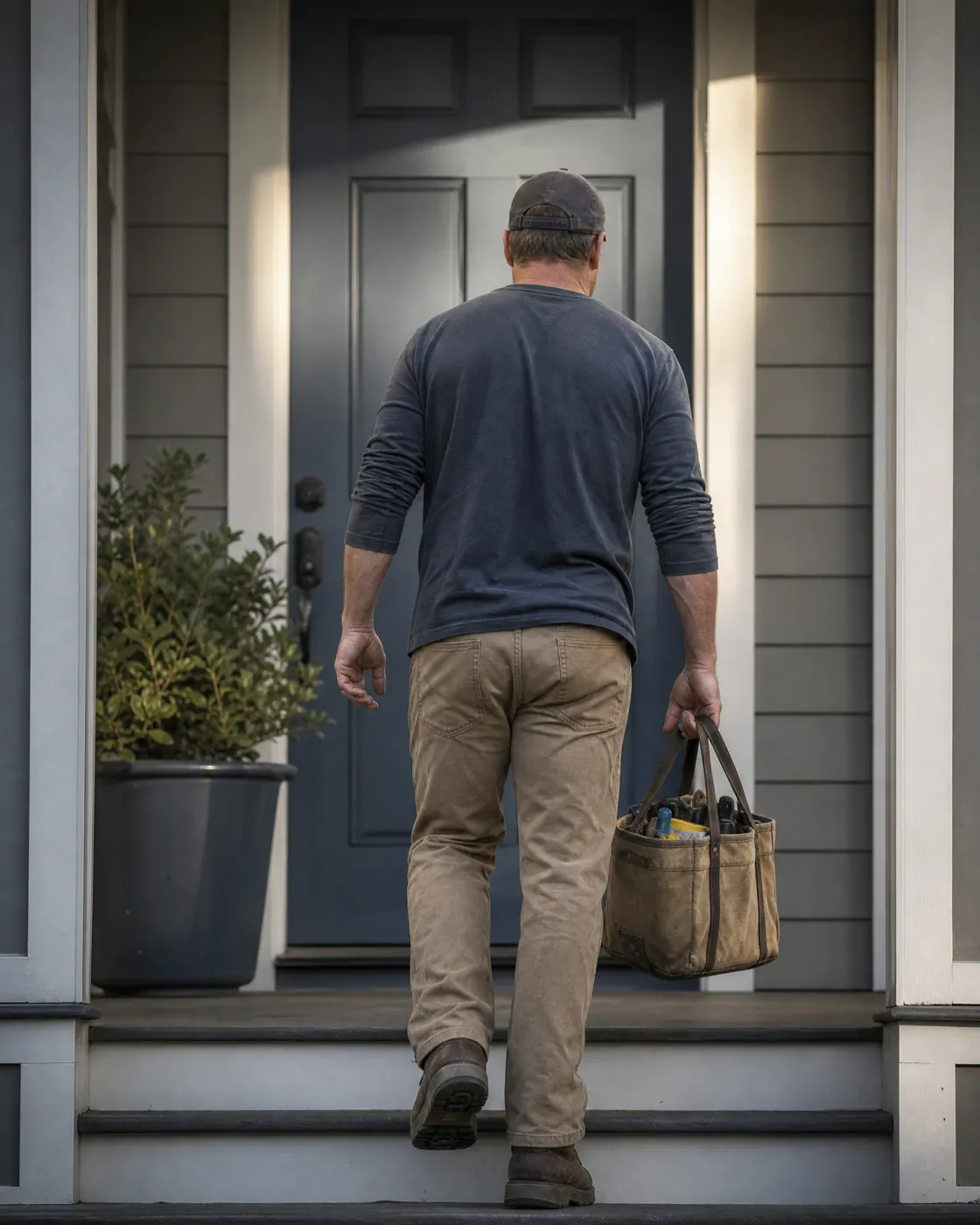
A man in a cap, long-sleeve navy shirt and tan work pants walks up porch steps toward a dark front door, carrying a canvas tool bag in his right hand, with a potted shrub to the left.
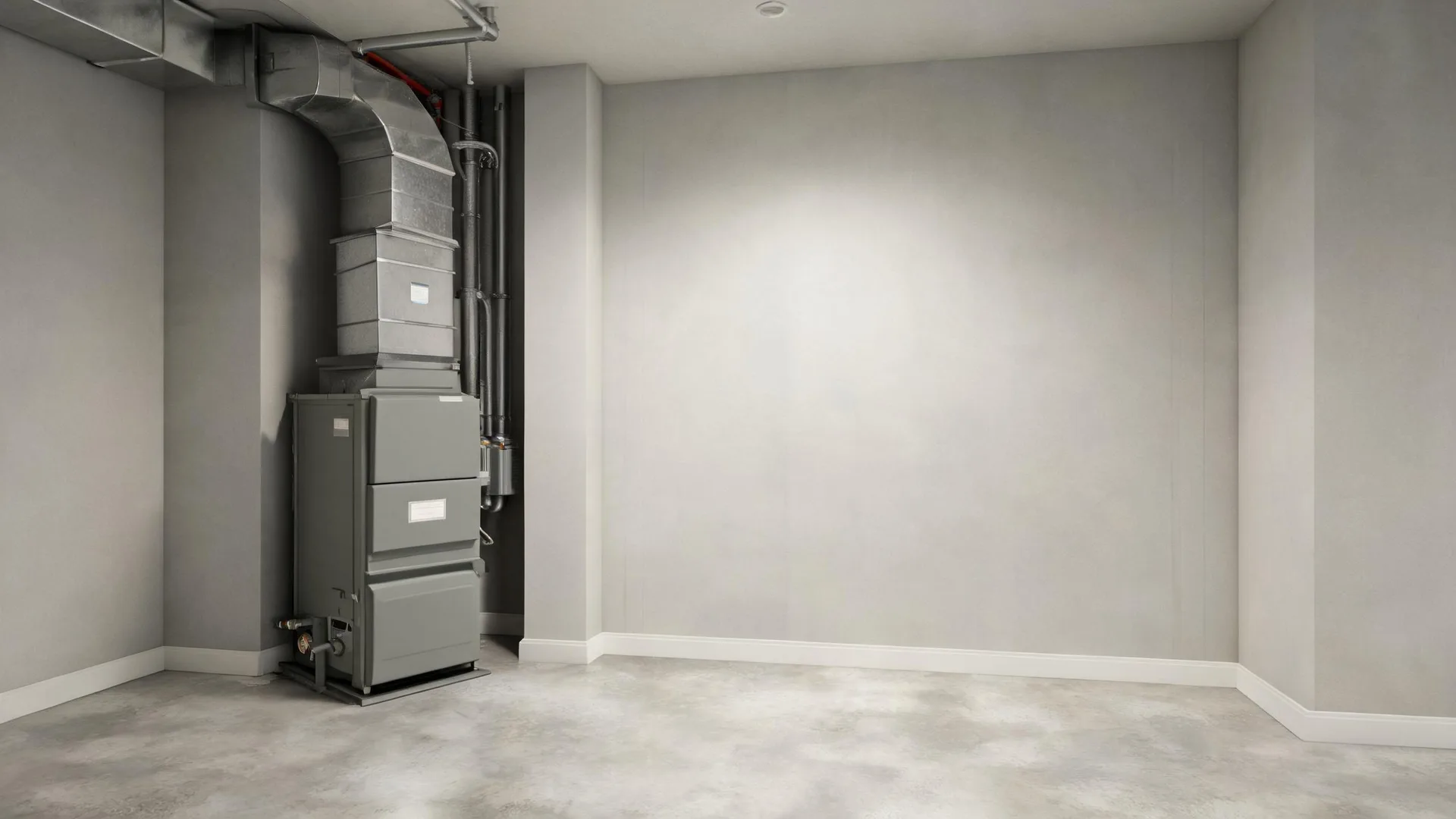
A gray residential gas furnace installed in an unfinished basement, surrounded by ductwork, a metal flue pipe, and a gas supply line.

Sized for your house, not just the square footage

A furnace that's too big for the house will still heat it, but it does the job badly. It blasts hot air for a short run, hits the thermostat setting, and shuts off before it's pulled the chill out of the walls and the floors and the furniture. Then the room cools and it fires up again. That short cycling wears on the heat exchanger and the blower motor, and it leaves rooms warm near the vent and cold everywhere else. A furnace that's too small just runs and runs, trying to catch up, and never quite does on the coldest nights. Getting the size right means a contractor working through a heat loss calculation on the house itself. That means the square footage, but also the windows, the insulation, the ceiling height, how many walls face the weather. A house with more glass or less insulation needs a different furnace than one its same size without those things. The number that comes out of that calculation tells the contractor what size to install. It's worth asking to see it rather than taking the size on faith.

The ductwork decides more than the furnace does

If the house already has ducts sized and sealed for the furnace going in, installation is mostly a swap. Old unit out, new one in, same vents and returns doing the work they already did. If the ducts are too small or leaky, or built for a different kind of furnace, the contractor has to rework them before the new furnace can heat the house the way it's rated to. That work is often the bigger part of the job, not the furnace sitting in the basement.

The venting has to match what's going in

A high-efficiency furnace pulls heat out of the exhaust before it leaves the house. That exhaust comes out cool enough that it needs its own plastic venting run through a wall or up through the roof, not the old metal flue. A standard-efficiency furnace can sometimes reuse venting that's already there. Which one a house needs changes what the installation involves before the new furnace ever turns on.

An unfinished basement containing a metal furnace with ductwork, exposed wooden joists on the ceiling, cardboard boxes, a coiled cable, and a single hanging incandescent bulb.

A high-efficiency gas furnace would save about $130 a year to run in Bay County compared with a gas furnace.

  • A high-efficiency gas furnace$610 a year
  • A gas furnace$740 a year

Estimates for a typical Bay County home, from EIA household energy data, Michigan fuel prices and NOAA climate normals. Your home will differ.

Install day starts with the old furnace coming out. That takes longer than people expect, since the gas line, the vent pipe and the ductwork all have to come apart and get checked before anything new goes in. The contractor sets the new furnace in place and connects it piece by piece. Gas line first, then venting, then ductwork, then electrical, then the condensate line if it's a high-efficiency unit. Each connection gets tested for leaks before it's closed up. Once everything is hooked up, the furnace gets fired and run through a full cycle so the contractor can check gas pressure, the temperature rise across the heat exchanger, and airflow at the vents. A furnace that looks done but hasn't been run and tested isn't actually finished. The last step is usually the thermostat and the filter, since a new furnace behind an old dirty filter won't run the way it's supposed to.