

Repair or replace a propane furnace in Baldwin, MI

A local pro who knows furnaces gets your details and gets in touch.

Get a furnace pro

Whether to repair or replace your propane furnace comes down to its age and what's failing. A furnace under 15 years old with a cracked igniter, a bad flame sensor, or a failed blower motor is usually worth fixing. Once the heat exchanger goes, or the unit is older and the repairs start stacking up, replacement is the better bet. This matters more in Baldwin than in milder places, because winters here are hard and most homes run on propane to get through them. A furnace that limps along in November can quit outright in January, and Lake County doesn't give you much warning before the cold sets in for good. If your furnace is still young and the problem is one part, a repair gets you through. If it's older and failing in more than one way, replacing it now means you're not calling for an emergency fix in the middle of the coldest stretch of the year.

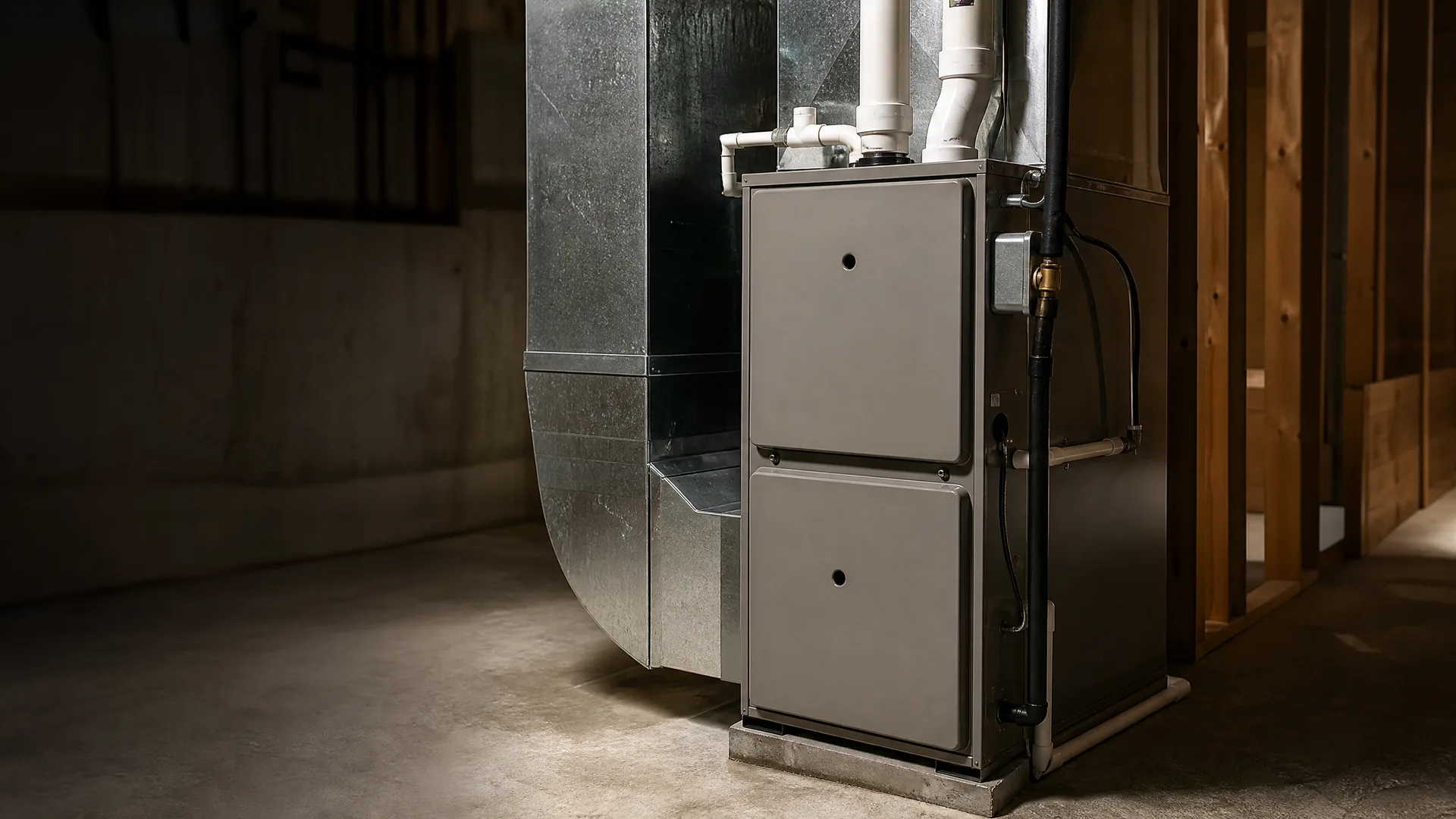
A dark high-efficiency furnace on a concrete pad in a basement, connected to galvanized ductwork, white PVC vent pipes, and copper and black gas piping, with concrete walls and wood framing nearby.

Still worth fixing

This is what a working propane furnace looks like: clean burn, tight connections, a cabinet that isn't rusting from the inside. If yours still looks like this and the repair is a part, not the heat exchanger, fixing it makes sense. Parts like an igniter or blower motor can be swapped without touching anything else.


A gas furnace with a louvered upper panel stands on a concrete pad in a basement, flanked by sheet-metal ductwork, white PVC and metal pipes, and insulated columns.

Signs it's time to replace

An older unit like this one, especially with a flexible conduit patched in alongside the original ductwork, has usually had more than one repair already. If the heat exchanger is cracked or the furnace is old enough that parts are getting hard to find, replacing it stops the repeat visits.

A woman with long blonde hair in a light blue shirt leans back on a beige sofa with her eyes closed, in a softly lit living room with cushions and a blurred plant and shelf in the background.
A woman with long dark hair in a gray knit sweater sits on a gray sofa with a cushion, looking toward a window in a living room with framed pictures and a lamp in the background.
A woman with long dark hair in a light grey knit sweater sits on a sofa indoors, looking to her right, with a framed landscape picture, a potted plant and a curtained window behind her.
A woman with long dark hair leans back against a gray sofa with her eyes closed, in a living room with a curtained window, a potted plant, and a dark screen in the background.

Why age decides so much

A propane furnace runs hard in Lake County. Winters here are long, and the burner cycles on for months straight, not just on the coldest nights. That kind of use wears out igniters, flame sensors and blower motors on a predictable schedule, and most of those parts are simple to swap. What it can't do forever is protect the heat exchanger. Years of heat cycling is what eventually cracks it, and a cracked heat exchanger is a safety problem, not a repair job. So the furnace's age isn't just a number. It's a rough measure of how close that exchanger is to the end, which is why a 6 year old furnace and an 18 year old furnace with the same symptom get different answers.

What propane cost has to do with it

Propane runs this area because the power grid here is expensive to lean on for heat, and that same cost works against an old furnace twice. A unit losing efficiency as it ages burns more propane to put out the same heat, on top of whatever propane already costs by the gallon. A new furnace with a higher AFUE rating gets more heat out of every gallon it burns. That gap matters more here than somewhere with cheap electricity to fall back on, because propane is the fuel doing the work all winter. It's one more reason an aging furnace with a big repair bill ahead of it is worth weighing against a replacement, not just patching and hoping it holds.

Why does a propane furnace in Lake County work this hard?

  • Winter nights average 16°F

    Overnight lows averaging 16°F mean the burner runs long cycles, not short bursts, for months at a stretch.

  • Heat runs September through May

    Heat runs from September through May here. That's nine months of the year your furnace can't take a season off.

  • 53.1% of homes heat with propane

    Propane heats 53.1% of homes in Lake County, more than any other fuel, so parts and service for your furnace are easy to find locally.

NOAA nClimDiv 1991-2020 · ACS 2020-2024

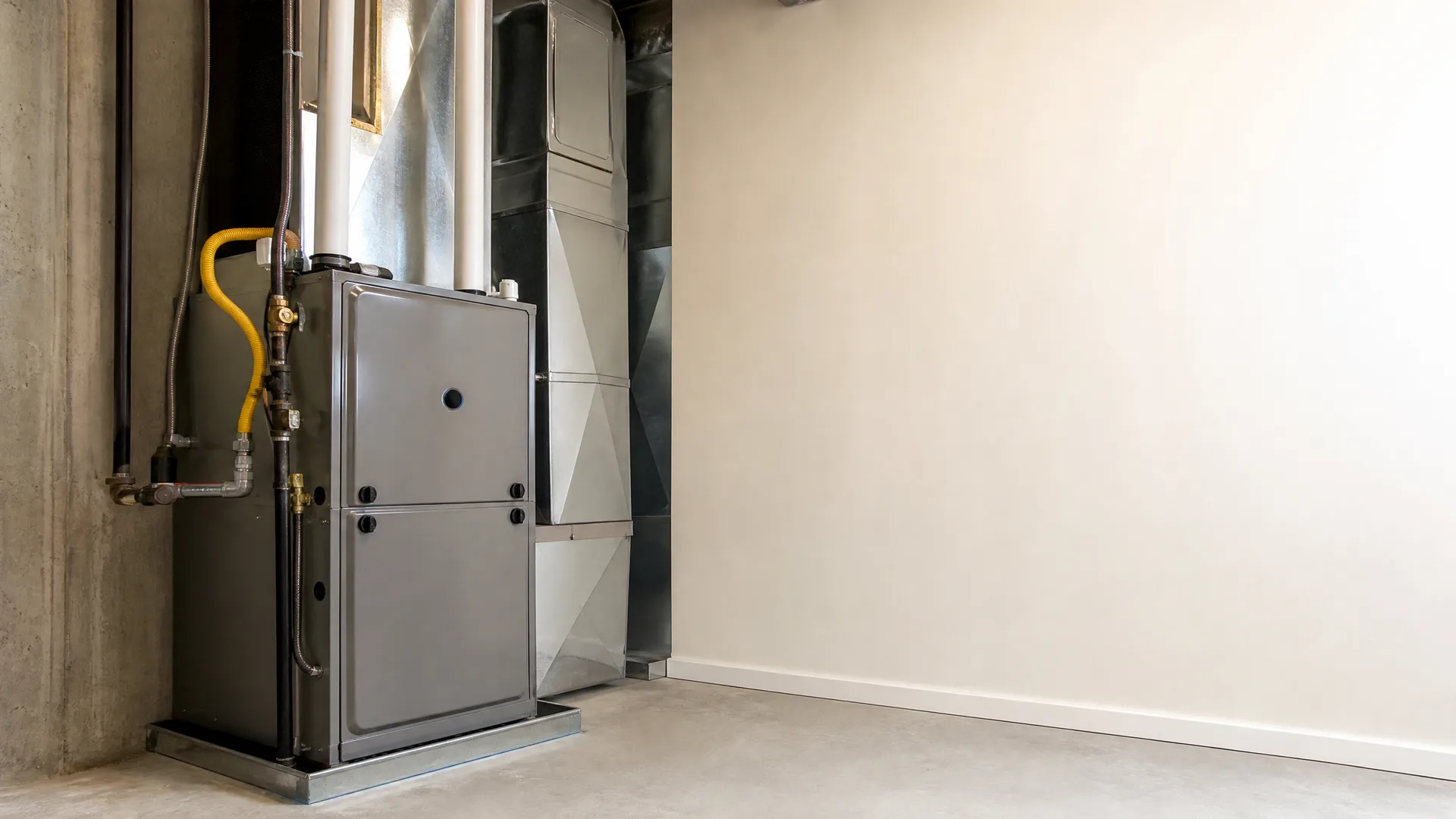
A gray gas furnace with attached yellow gas line, copper piping, white PVC vent pipes and sheet-metal ductwork stands against a wall in an empty basement room with a concrete floor.

What a failing furnace costs you here

A furnace that's struggling doesn't fail all at once. It runs longer to hold the same temperature, and on propane that shows up fast on the tank gauge. Lake County winters don't let up from September to May, so a unit losing efficiency burns through fuel for nine straight months, not just on the cold snaps. You'll notice the thermostat set where it always was and the house still feeling a few degrees short.

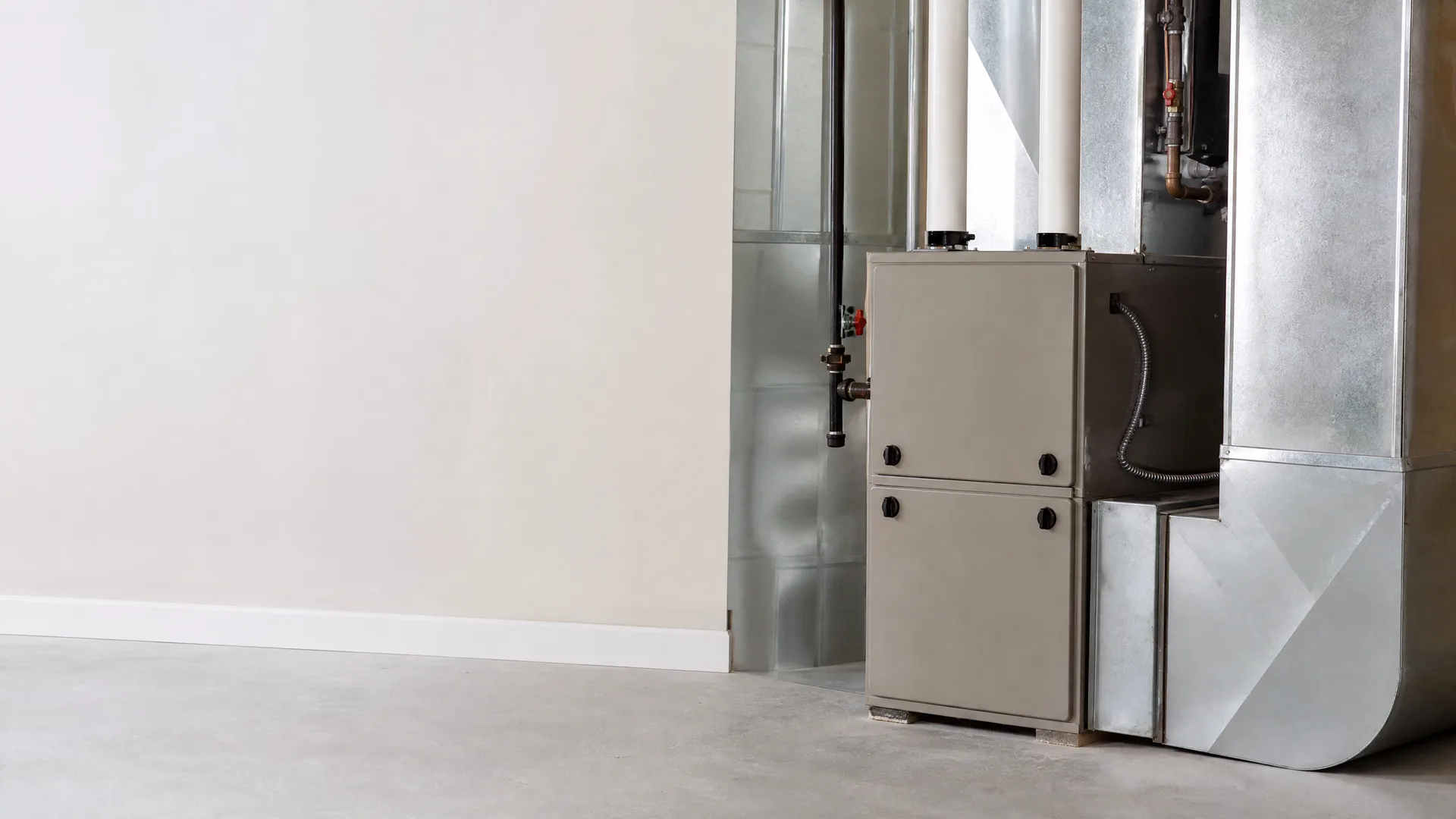
A beige high-efficiency furnace with white PVC vent pipes stands against a wall beside galvanized sheet-metal ductwork in an empty room with a concrete floor.

What happens if it quits in January

Power here is expensive, and most homes in the area count on propane heat for a reason. If the furnace goes out on a night when it's 16 below zero outside, there's no quick switch to a space heater that won't run up the electric bill fast. A cracked heat exchanger or a failed blower motor won't wait for a convenient week. The longer a marginal furnace runs without attention, the less warning you get before it stops.

How do I know if my propane furnace's heat exchanger is cracked?

A cracked heat exchanger is the one problem that ends the repair conversation, and most homeowners have never seen one or been told what to look for. You're asking because something feels off, maybe a smell, maybe a sound, maybe just the gut sense that this furnace has run too many winters, and you want to know what a technician would actually check before they tell you the furnace is done.

A technician checks for a wavering flame and tests the air for carbon monoxide

The heat exchanger is the sealed chamber that holds the flame and keeps combustion gases separate from the air moving through your ducts. A crack lets those gases mix with that air. A technician looks for a burner flame that flickers or changes shape when the blower kicks on, since that shift in airflow through a crack disturbs the flame. They'll also run a carbon monoxide test near the exchanger and check the cabinet for soot or rust streaks. Any one of those findings ends the repair discussion. A cracked exchanger isn't a part swap. It means the furnace gets shut down and replaced, not patched, because there's no safe way to seal that crack and keep running it.

An older beige furnace with a louvered vent panel stands on a concrete basement floor beside galvanized sheet-metal ductwork, a metal flue pipe and vertical pipes along a concrete wall.
Before you get your furnace installation
A beige high-efficiency furnace with white PVC vent pipes stands beside galvanized sheet-metal ductwork in a basement with a concrete floor, exposed wood studs, and metal piping along the wall.
After you get your furnace installation
A gray two-panel furnace stands on a concrete basement floor beside large sheet-metal ductwork, with white PVC vent pipes, a metal flue, and a black gas line with a yellow flexible connector running above it.

A local pro for your furnace installation

Send the form and stop researching installers for the new furnace.

Your new furnace project goes to an installer who works in Lake County.

Connect with a pro

No fee to send it, and nothing to sign.

What are you noticing about your furnace right now

Maybe it's a smell of propane near the unit, or a burner flame that looks yellow instead of blue. Maybe the furnace clicks and tries to light but doesn't catch, or it runs and shuts off again before the house warms up. Some homes notice a room or two that never gets as warm as the rest, or a furnace that's louder than it used to be, a rattle or a hum that wasn't there last winter. If the burner is sooting up the cabinet or you're seeing rust where the flue connects, that's worth having looked at soon. Left alone, a furnace working that hard can leave the house colder than it should be during the months you need it most, and it can run through propane faster doing it.

A gray high-efficiency furnace with two PVC vent pipes stands in an unfinished basement beside sheet-metal ductwork, a framed and plastic-covered wall, and a bare concrete wall with vertical pipes.

Running clean

This is a furnace doing its job. The burn is steady, the flue pipes run tight to the wall, and the gas line has no kinks or corrosion. A cabinet like this, free of rust and soot, usually means whatever's wrong inside is a part, not the heat exchanger.

A gray furnace cabinet in a basement, connected to galvanized sheet-metal ductwork and white PVC pipes, against a concrete wall with exposed metal piping and insulation overhead.

Set aside and failing

This furnace sits on a pallet, already pulled from service. When a unit ends up here instead of connected and running, it's because something inside failed past the point of a repair, often the heat exchanger. Rust on the block walls or standing moisture nearby can shorten a furnace's life the same way.

A man in a dark jacket and khaki pants walks through an open gate in a stone wall toward a woman standing in the open front doorway of a single-story white house with a dark shingled roof and river-rock accents.

What a failing furnace means for your house in January

A propane furnace that's losing the fight doesn't announce it. The thermostat says 68 and the house feels closer to 63. You bump it up, the furnace runs longer to get there, and the tank that was supposed to last through February is getting refilled in January instead. Meanwhile the room where someone naps, or the nursery, or wherever the vents run weakest, stays colder than the rest no matter what the thermostat reads.

If you're past the point of wanting to chase the problem part by part, or the furnace is old enough that another repair just delays the next one, the form on this page gets you matched with a contractor who covers Baldwin and the rest of Lake County. They'll look at your furnace, tell you straight whether it's a repair or a replacement, and take it from there. You don't have to figure out which it is before you ask.

A light gray sofa with gray and beige textured throw pillows and a cream knit blanket beside a white-framed window, with a small round side table holding a ceramic vase and potted greenery.
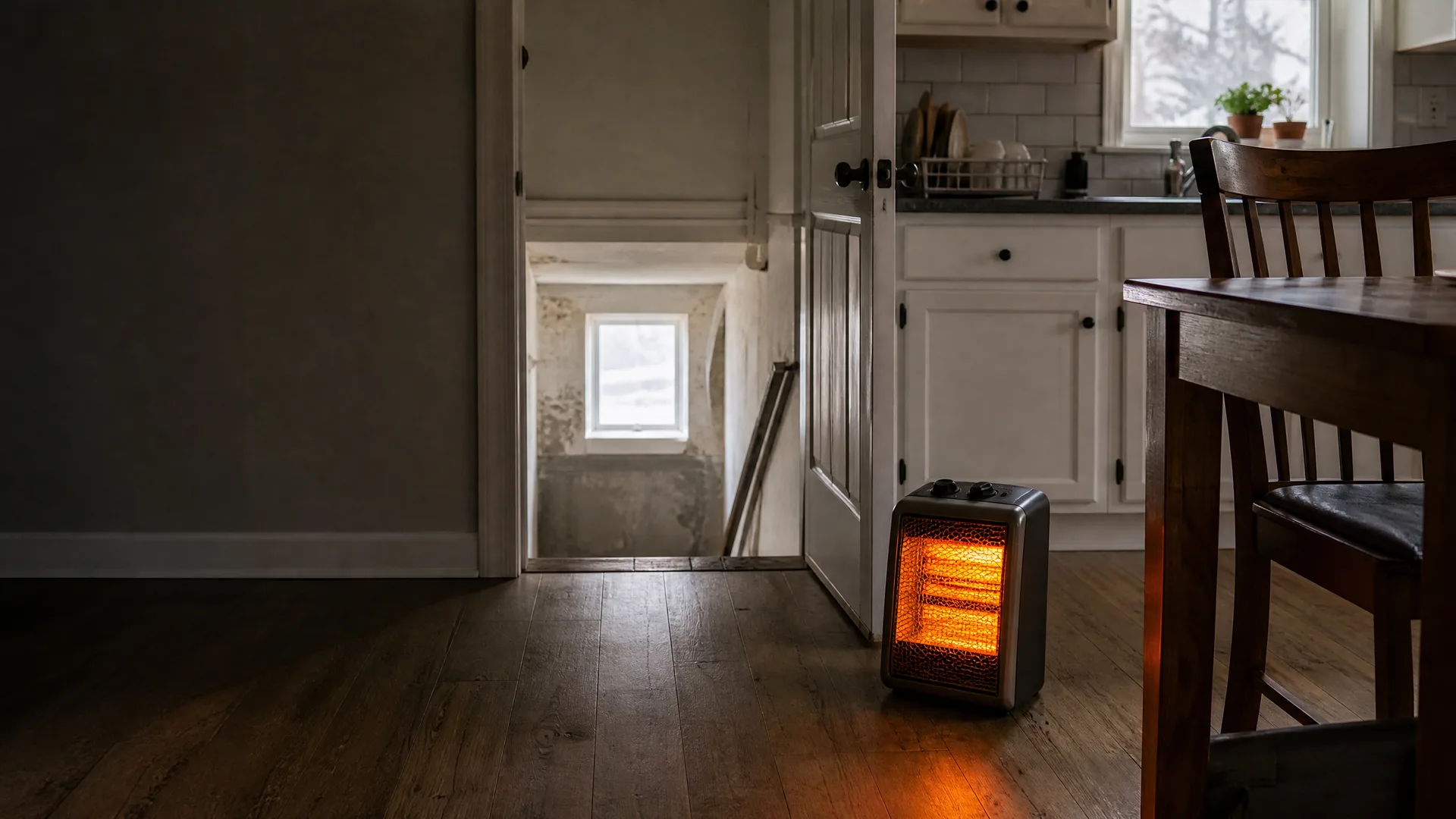
A small portable electric space heater with glowing orange elements sits on a dark hardwood floor near a doorway opening onto a basement stairway, with a kitchen counter, cabinets and a wooden table and chair to the right.

It's just past six and still dark outside. You're up before the kids, standing in the kitchen in your coat because the furnace stopped keeping up two days ago and you haven't dealt with it yet. The space heater by the table is doing what it can, its coil glowing orange, the cord running back to the only outlet that reaches. The basement door is open behind it, propped, because that's where the furnace is and you keep meaning to go check the flame again before everyone wakes up and the coffee has to happen and the day takes over.

Winter nights average 16°F

At 16°F, your furnace isn't cycling off much once the sun goes down. It's holding a burn most of the night to keep the house where you set it. A furnace that's already struggling shows it fastest on nights like these.

NOAA nClimDiv 1991-2020

Repair or Replace, Decided

  • A furnace under 15 years old with a worn part like an igniter or blower motor is usually worth repairing.
  • A cracked heat exchanger or a furnace near the end of its life points toward replacement instead of another repair.
  • Lake County winters run long, with heat needed from September through May, so a failing furnace shows itself fast.
  • Propane use climbs as a struggling furnace runs longer to hold the same temperature in your house.
  • Getting a straight answer on repair or replace starts with having the furnace looked at, not guessed at.
  • Once you send the request, finding someone to look at your furnace is no longer something you have to chase down yourself.

The question you started with has a simple test. Look at the age of the furnace and look at what's actually broken. A worn igniter, a bad flame sensor, a failed blower motor, on a furnace that's not old, that's a repair, and a reasonable one. A cracked heat exchanger, or a furnace that's old and failing in more than one way, that's a replacement, because you'd be paying to patch a unit that's already on its way out.

What makes this harder to sit with here is the winter. Heat runs September through May in Lake County, which means a furnace that's struggling doesn't get a break to show you slowly what's wrong. It shows you in a cold room and a propane tank emptying faster than it used to, because a furnace that's losing the fight runs longer to hold the same setting, and on propane you feel that in the tank gauge before you feel it anywhere else.

None of this is something you have to work out on your own by watching the thermostat and guessing. Having the furnace looked at turns the guesswork into an answer, the part that's failing, the age that matters, whether it's worth fixing or time to replace it. And once you send the request, you're not the one tracking down who's available or chasing a callback. That part moves off your plate the moment the form goes in.

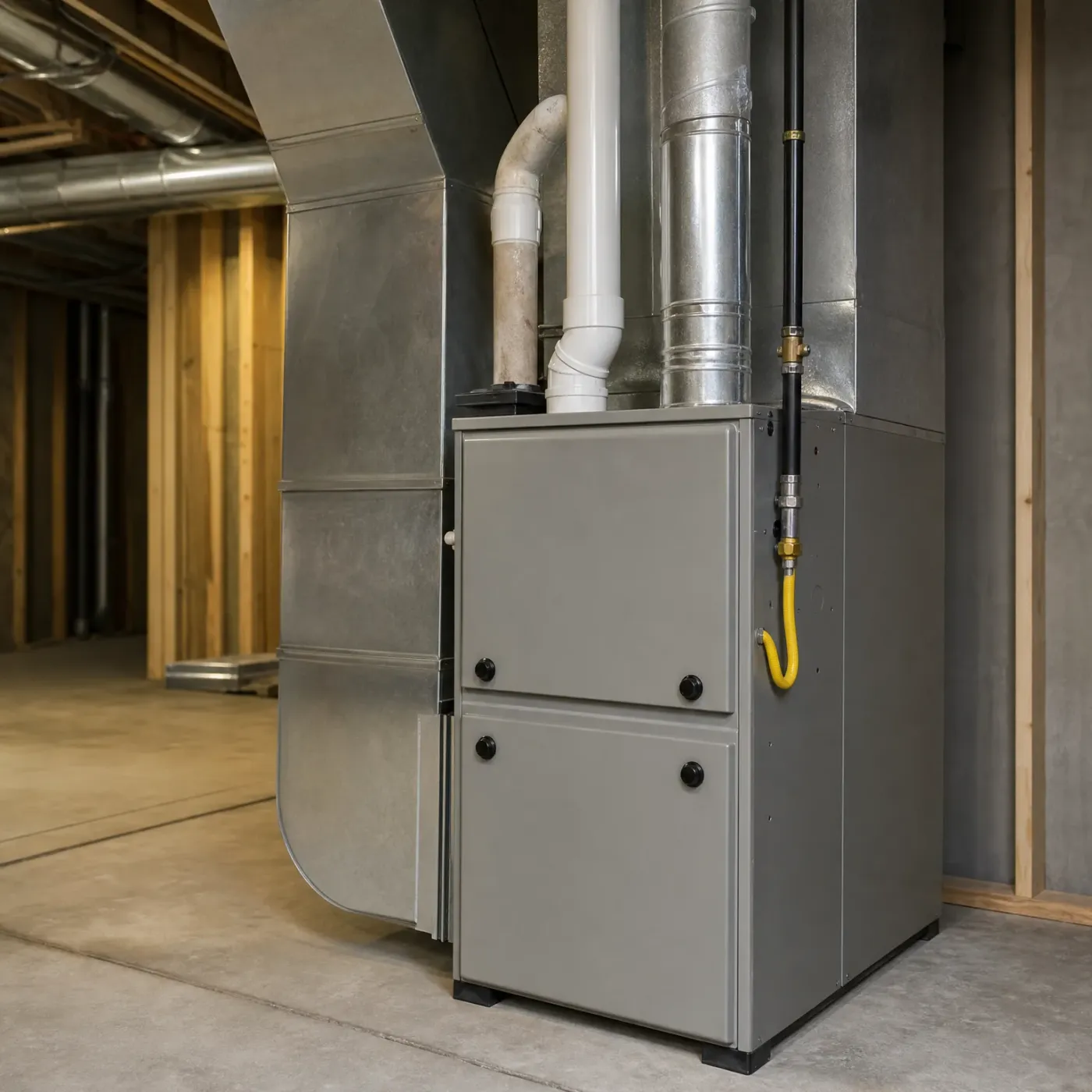
A gray high-efficiency furnace with white PVC vent pipes stands on a concrete basement floor beside galvanized sheet-metal ductwork and exposed wood framing.

Get the right pro for your furnace

New system or replacementFurnace or heatingLake County, MI
Step 1 of 2

What ZIP code is the job in?