




A row of single-story houses with dark siding and gray shingled roofs behind large deciduous trees, with a trimmed hedge in the left foreground and a mown lawn under an overcast sky.

Heat Pump Installation in Traverse City, MI

Tell us about the job

Takes about a minute. No obligation.

New system or replacementHeat PumpGrand Traverse County, MI
Step 1 of 2

What ZIP code is the job in?

Electricity in Michigan runs 19.30 cents per kilowatthour, and a heat pump here will run on that rate all winter. That makes the efficiency rating worth reading closely before you buy. A unit that squeezes more heat out of every kilowatthour costs less to run through a Traverse City winter than one that doesn't, and the difference shows up on every bill. Ask what HSPF2 rating you're looking at, not just the price on the install.

9 months
September through May, your system heats
2 months
July through August, it cools
16°F
the average winter night it heats against
78°F
the average summer afternoon it cools against
Isometric cutaway illustration of a single-story house showing interior rooms with furniture, an attic duct system connected to an indoor air handler, and an outdoor condenser unit linked by lines along the exterior wall.
Your system heats September through May and cools July through August.

NOAA nClimDiv, 1991–2020 normals

Heat here starts in September, and May is still cold enough to need it.

Put a heat pump in during August and it's broken in and running before the first cold night.

The weather here wears on a roof and a power line, not on a heat pump running quietly inside

34 damaging wind events from 2015 to 2024
17 hail events from 2015 to 2024
27 winter storms from 2015 to 2024

Grand Traverse County has seen 78 severe weather events between 2015 and 2024, and damaging wind is behind most of them. Your heat pump's outdoor unit sits outside year round, so where it goes matters. Keep it clear of roof runoff and falling limbs, and set it where plowed snow won't bury it. Hail has hit this county too, and a bent fin or cracked fan blade shows up as a system that runs harder for less heat. Outages matter more in winter. A heat pump needs power to run at all, so if you want backup heat for the nights the power drops, that's a conversation to have with the installer before the unit goes in, not after.

Most homes here run on gas, and that ductwork is ready for a heat pump

Gas heats 72.7% of homes in Grand Traverse County, and most of those have ductwork already in place. That matters for a heat pump, because it can run through the same ducts your furnace uses now. Keep the furnace as backup for the coldest nights, or let the heat pump take the load on its own. Either way, the ducts already running through your house are most of the job done.

Find a contractor
A gray outdoor HVAC unit mounted on a concrete pad beside a house with gray lap siding and a stone foundation.

This system doesn't get an off season

A heat pump doesn't shut off for the season the way a furnace does. It runs on the cold days and it runs on the hot ones, switching direction depending on what the house needs. That means the reversing valve, the part that flips the system between heating and cooling, is in use far more than it would be on a system that only does one job. When you're comparing units, ask what happens if that valve sticks. Some systems default to heat, some default to cooling, and some just stop until it's serviced. It's a small part carrying a lot of the load, and it's worth knowing before you buy, not after it's stuck in the wrong season.

HSPF2 is the number that matters for heating

A heat pump is rated for both the heat it makes and the cooling it makes, under different labels. HSPF2 covers the heating side, the number that tells you what you get out for the electricity you put in during cold weather. If heating is why you're buying, compare HSPF2 between units. The cooling rating on the same label won't tell you anything about how it performs on a cold night.
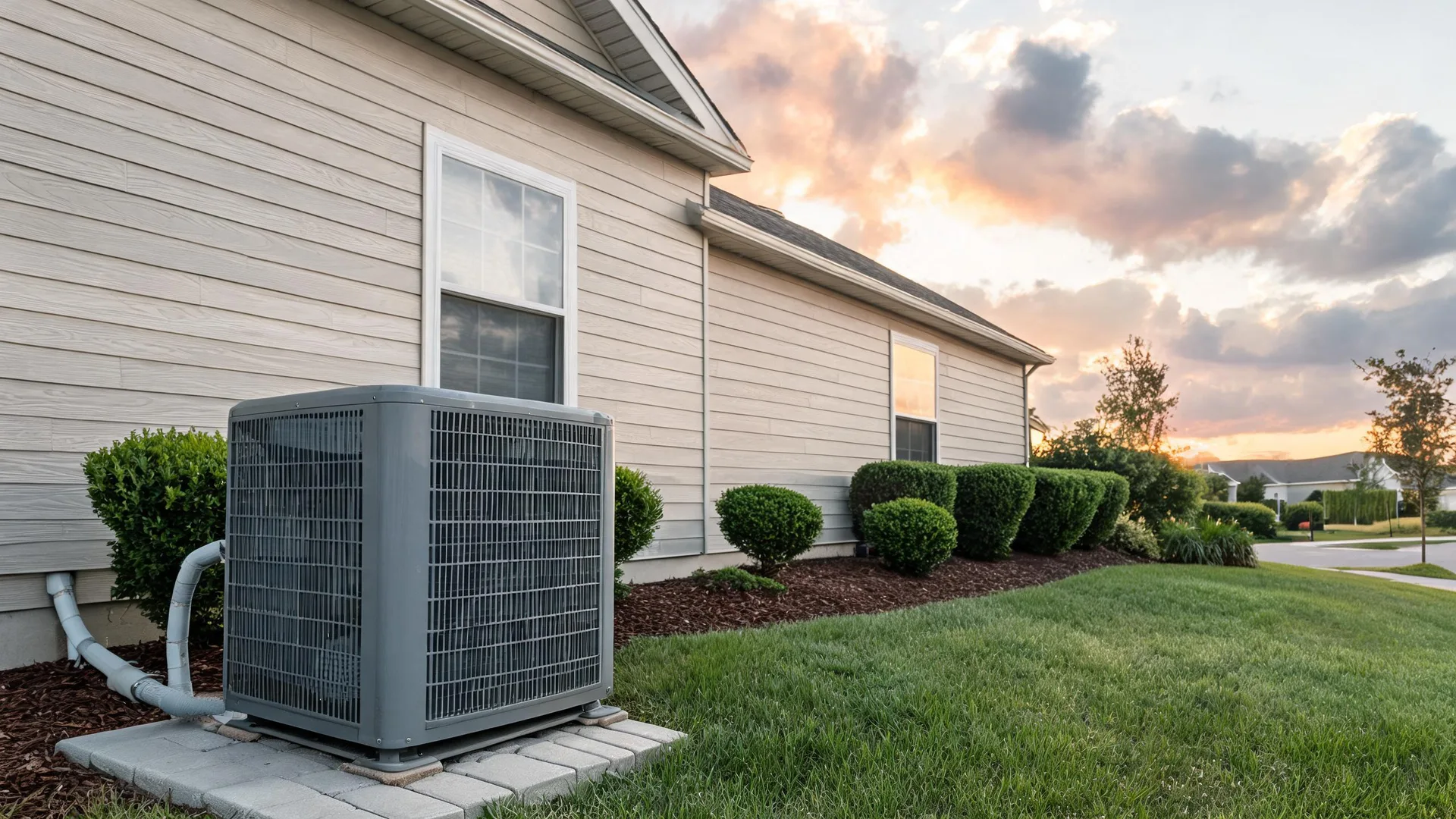
A higher rating usually comes from a compressor that can step down

A unit built to earn a high rating runs at partial output most of the time and steps up only when it needs to. A compressor that only runs full blast every time it kicks on, no matter how mild or cold it is outside, can't hit the same number. That difference shows up as steadier heat through the house, not just a lower bill.

Installed cost comes down to what the job takes, not just the equipment sitting in the truck. A straight swap, same spot, same ductwork, same electrical, is the simplest version of this job. Add a line set run that has to go further than the old one, or a breaker panel that needs more room for the new circuit, and the labor climbs before the unit is even set. Ductwork matters too. Ducts that were sized for a furnace sometimes need a return added or a run adjusted so the heat pump can move enough air at the lower output it often runs at. The outdoor unit needs a pad or mount that keeps it level and clear of roof runoff, and getting that placement right the first time costs less than moving it later. None of that shows up on the sticker price of the equipment, but it's most of what separates one quote from another.

Install day starts with the old system coming out, not the new one going in. The line set gets disconnected, the refrigerant recovered, the old outdoor unit and air handler pulled clear so the crew is working with an empty spot, not around a running system. From there it's mounting the new air handler, setting the outdoor unit on its pad, and running a new line set between them if the old one isn't being reused. Electrical comes next, a breaker sized for the new unit and a disconnect at the outdoor unit so it can be shut off for service later. Once it's wired and the line set is brazed and pressure tested, the system gets charged with refrigerant to the weight the manufacturer specs, not just until it runs. Last comes startup, checking airflow at the registers, checking that the compressor steps down the way it's supposed to instead of running full blast all the time, and checking the temperature split between the air going in and the air coming out. A job that goes smoothly looks almost uneventful from the homeowner's side. Most of the work is in getting those last checks right, not in anything dramatic.