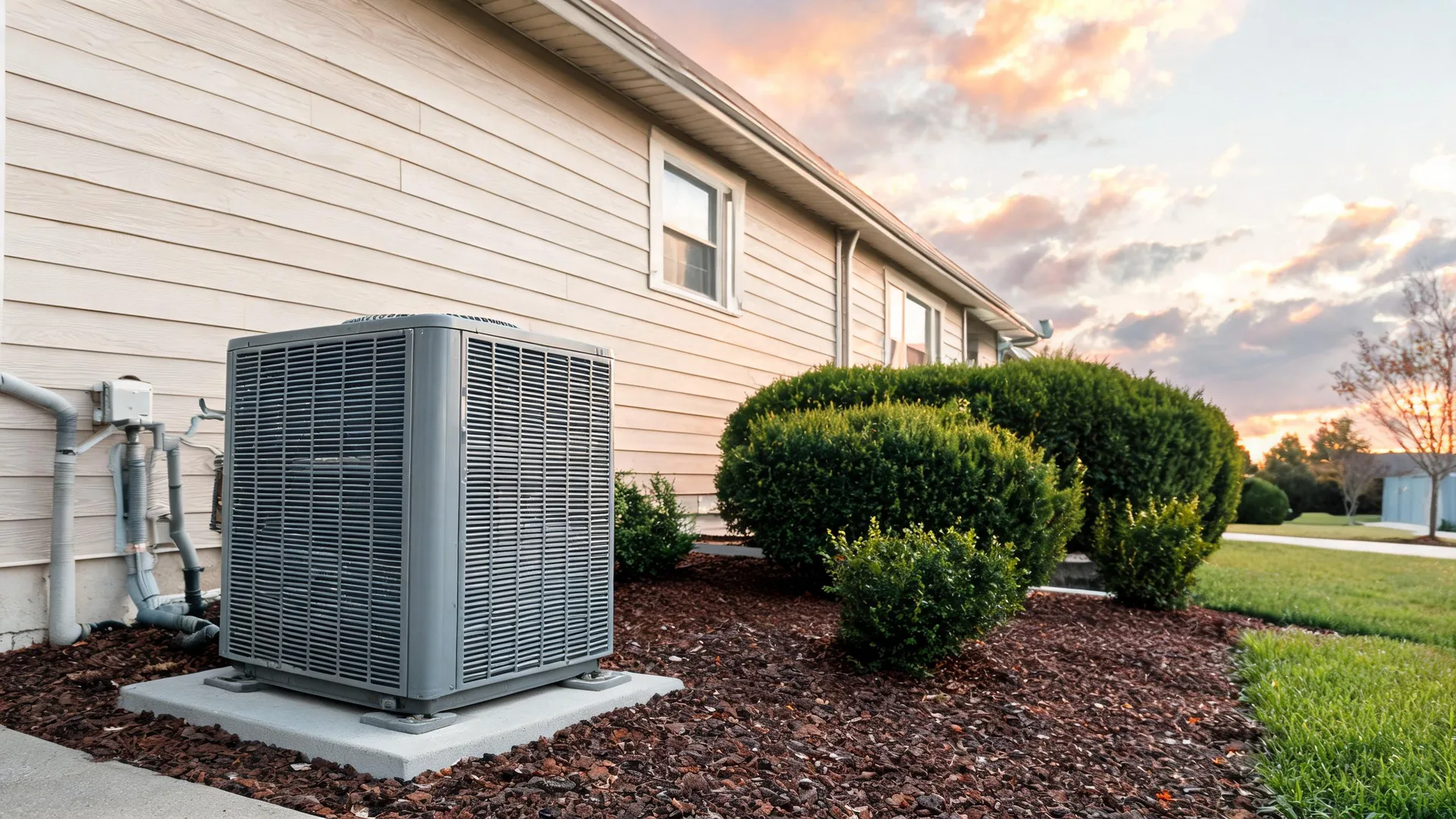
Electricity here runs 19.30 cents a kilowatt-hour
Michigan power costs more than in most states, and a heat pump runs on electricity to both heat and cool the house. That rate applies to every hour the compressor is working, all year round.
Takes about a minute. No obligation.
Michigan power costs more than in most states, and a heat pump runs on electricity to both heat and cool the house. That rate applies to every hour the compressor is working, all year round.
Two heat pumps can heat and cool the same house, and one will cost less to run every month. At this rate, the gap between a system that runs efficiently and one that doesn't shows up on every bill, not just the big ones.

NOAA nClimDiv, 1991–2020 normals
Gas heats 44.5 percent of homes in Sanilac County, more than any other fuel.
A heat pump replacing a gas furnace still has to answer to that electric rate, all year.



Heat runs October through May here, eight months out of the year, and cooling picks up for July and August. That doesn't mean the compressor is working hard through all of it. Most of those heating months only ask for mild output, with the coldest stretch doing the heavy lifting. Installing in September gets the system checked and running before it has to answer to anything. Install in October instead, and day one is already a workday, with no room to catch a setup problem before the house needs heat. The same logic puts a cooling install in June, ahead of the two months it actually has to earn its keep.
Any heat pump installed in Sanilac County now has to hit 14.3 SEER2 and 7.5 HSPF2 at minimum, under the federal rule for systems built from 2023 on. That floor is already set before you start comparing models. In zone 5A, where heating carries the bigger load, the HSPF2 number matters as much as the cooling rating, if not more.
Find a contractorHalf the homes in Sanilac County were built in 1971 or earlier. A house that age was built to match whatever heated it then, not a heat pump. That doesn't rule a heat pump out. It means the installer has to size the unit to the house as it stands now, not swap in a box that matches the old one.
Sizing a heat pump means working out how much heat the house loses in winter and gains in summer, room by room. An installer measures the square footage, checks window area and which way they face, counts exterior walls, and looks at how much insulation is actually up in the attic and in the walls. A unit sized off the old furnace's rating, or off square footage alone, skips most of that work.
A heat pump that's too big cools the air fast and shuts off before it pulls the moisture out. The house ends up clammy even at the right temperature, and the compressor cycles on and off more, which wears it down faster over the years. One that's too small runs constantly during the coldest and hottest stretches and still falls behind, leaning on backup heat far more than it should.
A quoted price on a heat pump install is really a few separate costs stacked together, and it helps to know what they are. The unit itself is one piece, and bigger capacity or a higher efficiency rating costs more before anyone shows up to install it. Labor is another, and it moves with how much the job asks of the crew, not just how many hours they're on site. Ductwork is often the real variable. If the existing ducts are the wrong size for the new system's airflow or leak at the joints, they need work before the heat pump can perform the way it's rated to. Electrical matters too, since a heat pump draws differently than a furnace did, and the panel or wiring sometimes needs upgrading to carry that load. Where the outdoor unit goes, how far the line set has to run, and whether the old equipment needs removing all add their own time on top.
Installation day starts with a walkthrough to confirm what the load calculation worked out on paper. Then the old equipment comes out, and that part often takes longer than people expect, since refrigerant has to be recovered properly rather than just disconnected. The outdoor unit goes on a pad or mounting bracket and gets leveled, because a unit sitting crooked wears its compressor mounts unevenly over time. Line sets run between the outdoor and indoor units, get brazed, then get pressure tested before any refrigerant goes in, since a leak found after charging means redoing work that was supposed to be finished. Electrical gets tied in next, and this is where a day can run long if the panel or wiring needs upgrading to carry the load. Once it's charged and powered, the crew runs it in both heating and cooling, checking temperatures at the vents and listening for anything that shouldn't be there.