A low-angle view across a mown lawn toward a two-story dark-sided house with a covered front porch, flanked by large green trees under an overcast sky.

Heat Pump Installation in Jackson, MI

Tell us about the job

Takes about a minute. No obligation.

New system or replacementHeat PumpJackson County, MI
Step 1 of 2

What ZIP code is the job in?

Electricity here runs 20.57 cents a kilowatt-hour

Jackson County homes paid an average of 20.57 cents per kilowatt-hour in 2025, more than most counties in the country pay. A heat pump runs on electricity, so that rate applies to every hour it works.

Efficiency is what you're paying for

A heat pump that squeezes more heat out of each kilowatt costs less to run here than one that doesn't, because the rate per kilowatt-hour is already working against you. The difference between a good match for this job and a poor one shows up on the bill before it shows up anywhere else.

8 months
October through May, your system heats
3 months
June through August, it cools
19°F
the average winter night it heats against
80°F
the average summer afternoon it cools against
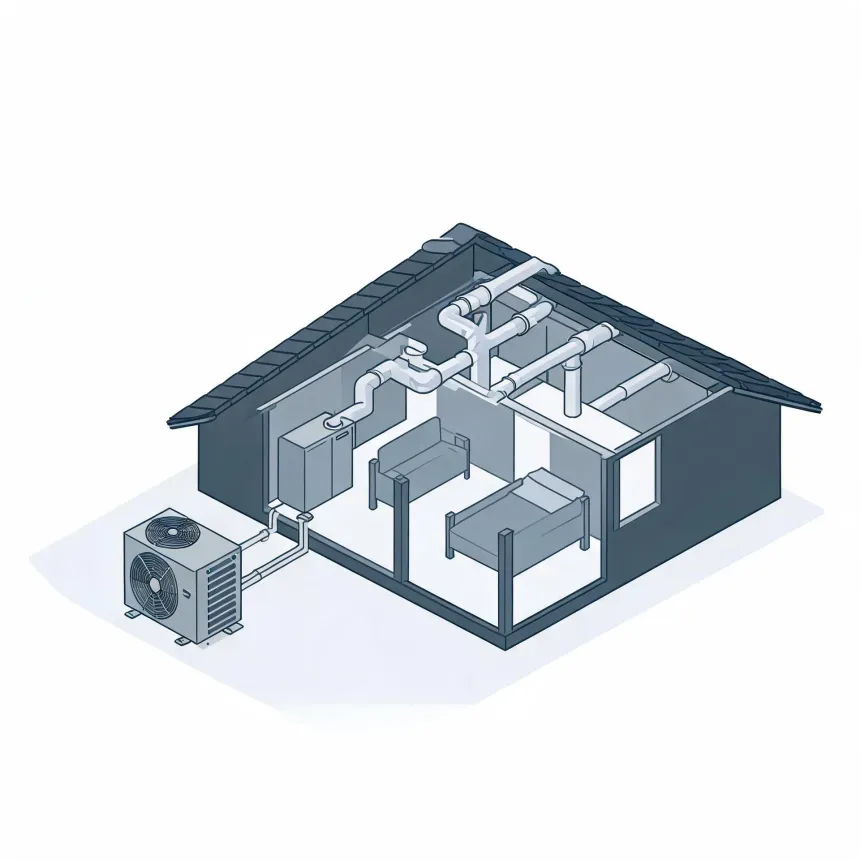
Isometric cutaway illustration of a house showing interior ductwork, an indoor air handler, and beds, with an outdoor condenser unit connected by lines outside the wall.
Your system heats October through May and cools June through August.

NOAA nClimDiv, 1991–2020 normals

Half the homes in Jackson County were built in 1967 or earlier.

An older home can need duct or electrical work before a heat pump will run the way it's rated to.

Storms here knock out power. Plan the outdoor unit and your backup for that.

48 severe weather events from 2015 to 2024
34% of homes statewide lost power a day or more in 2024
31 damaging wind events from 2015 to 2024

Jackson County sits in zone 5A, a cool climate where heating carries the bigger load across the year. A heat pump here isn't fighting extreme heat the way it would further south. Summers get sticky, with a dew point around 60°F over June, July and August, but that's mugginess, not the kind of heat that pushes a system to its limit all day long. A well-built heat pump sized right for your house will hold up fine without reaching for the highest efficiency tier on the shelf. Age and upkeep tend to catch up with a system here more than the workload does.

Get the rating in writing before it gets installed

The rate here already works against you on every kilowatt. Ask what efficiency rating is going on the unit, and get it in writing before the work starts.

Find a contractor
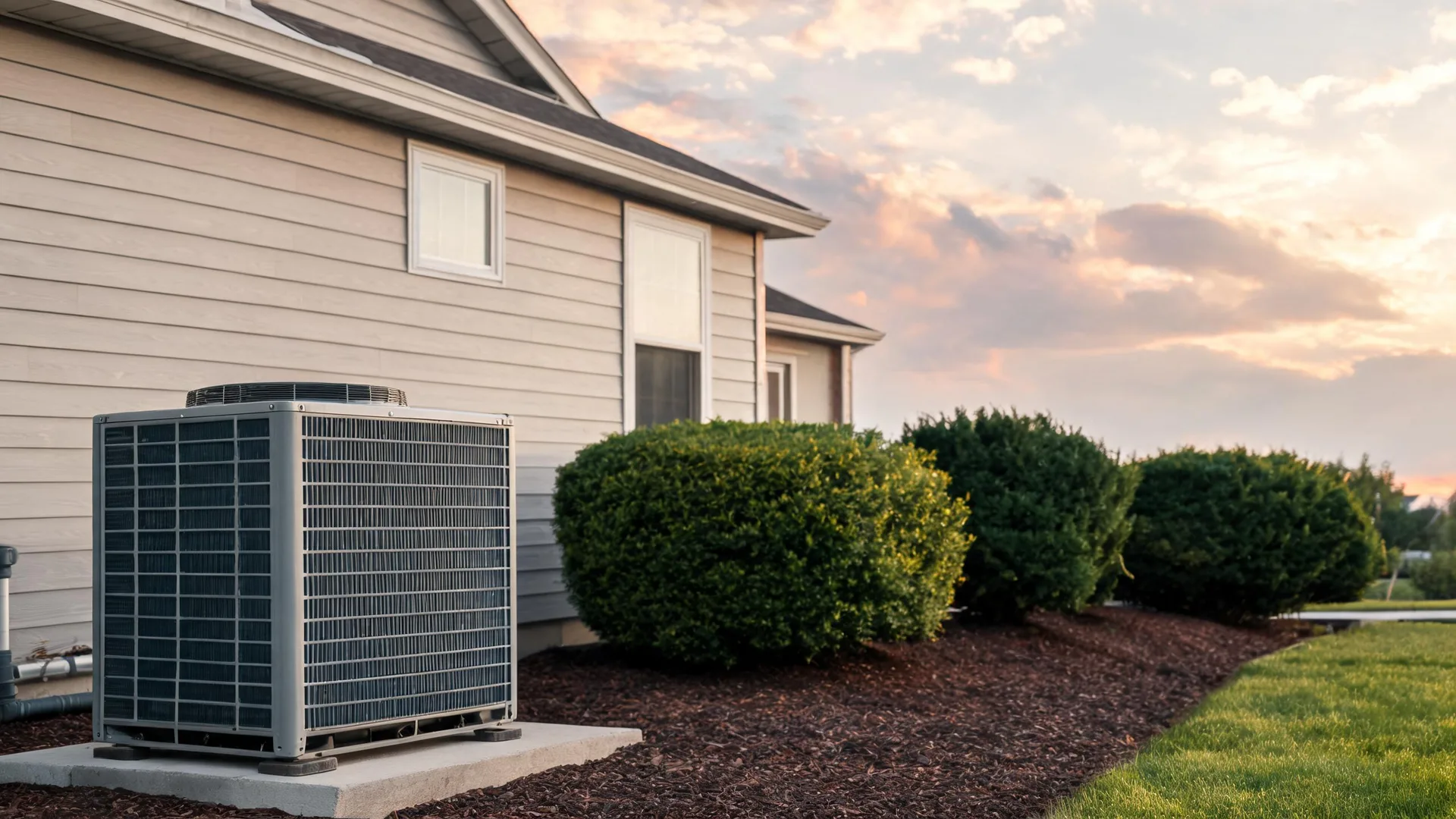
A gray heat pump outdoor unit mounted on a concrete pad next to the stone-accented exterior wall of a house.

Eight months of heat a year, starting in October

Heat runs October through May here, eight months out of the year. Cooling only runs June through August. So a heat pump in Jackson County spends most of its working life heating a house, not cooling one. September is the month before heat season starts, and it's the natural time to get a new unit in and running. Installed then, it gets tested through mild weather first, not during the first cold stretch when a problem is harder to catch and harder to live with. Wait until October and any mistake in the install shows up while you're already depending on the heat.

Ask for the heating rating, not just the cooling one

A heat pump carries two different ratings, one for cooling and one for heating. Sellers tend to lead with the cooling number because it's usually the bigger, more impressive figure. Ask for the heating rating by name and compare that one against other systems, since that's the number tied to the job this machine will mostly be doing.

Ask what happens at the coldest point

Every heat pump has a point where it stops pulling enough heat from outside air on its own and leans on backup heat instead. Ask where that point is for each system you're comparing and what kicks in when it's reached. Two systems can look the same on paper and behave very differently once the temperature actually drops.

A heat pump has to be sized against the actual heat loss of the house, not guessed from square footage or matched to whatever unit came out. Too big and it short cycles, kicking on, satisfying the thermostat fast, then shutting off before it's dehumidified the air or settled into a steady run. Too small and it runs flat out without keeping up, leaning on backup heat more than it should and wearing down faster for the work it's doing. The right size comes from a load calculation, a room by room look at windows, insulation, ceiling height and air leakage, not a number pulled from the old system's nameplate. A contractor who sizes it this way can tell you why the unit is the size it is. One who can't has probably just matched the old equipment.

Gas heats 71.4% of the homes in Jackson County, far more than any other fuel. If your house is one of them, a heat pump doesn't need to replace that furnace. It can sit alongside it in a dual fuel setup, running the heating load most of the year and stepping back when it gets cold enough that gas does the job cheaper. That's a different install than an all electric heat pump that has to cover every degree on its own, including the backup heat for the coldest stretches. Tell the contractor which one you're picturing, because the equipment, the controls and the wiring aren't the same job.