





A quiet residential street at dusk lined with illuminated two-story brick houses and mature trees.

Heat Pump Installation in Ionia, MI

Tell us about the job

Takes about a minute. No obligation.

New system or replacementHeat PumpIonia County, MI
Step 1 of 2

What ZIP code is the job in?

Electricity in Michigan ran 19.3 cents per kilowatthour in 2024. A heat pump moves heat instead of burning gas or firing up resistance coils, so it gets more out of every kilowatthour it draws. That matters more here than somewhere with cheaper power, because the gap between an efficient unit and a middling one shows up on every bill, all year. A unit sized right for your house and installed correctly will hold that efficiency. One that is oversized or undersized, or poorly installed, will not, no matter what rating is on the label.

8 months
October through May, your system heats
3 months
June through August, it cools
18°F
the average winter night it heats against
81°F
the average summer afternoon it cools against
Isometric grayscale illustration of a cutaway two-story house showing interior ductwork, an indoor air handler unit, and an outdoor condenser unit on a pad beside the building.
Your system heats October through May and cools June through August.

NOAA nClimDiv, 1991–2020 normals

A heat pump's rating is measured in a lab, not in your house.

Ask how the contractor sizes the unit for your home, not just which rating they sell.

A Michigan winter works a heat pump harder than a Michigan summer works an AC

13 winter storms from 2015 to 2024
Winter nights average 18°F
Climate zone 5A

Heat runs here from October through May, about eight months of the year. Cooling only runs three, June through August. So a heat pump in Ionia spends most of its working life heating the house, not cooling it. September is the month to get a replacement done, before that first cold stretch hits. Install it in a hurry once the heat is already needed, and sizing gets rushed too, and sizing is what decides whether the unit holds its efficiency through the winter ahead.

Most homes in Ionia already have what a heat pump needs

Utility gas heats 55.7% of homes in Ionia County, more than any other fuel. A gas furnace runs on ductwork, and a heat pump uses that same ductwork, so if gas is what your house already has, the path is straightforward. Replace the furnace or AC at the point you'd normally replace it, with a heat pump built to do both jobs.

Find a contractor
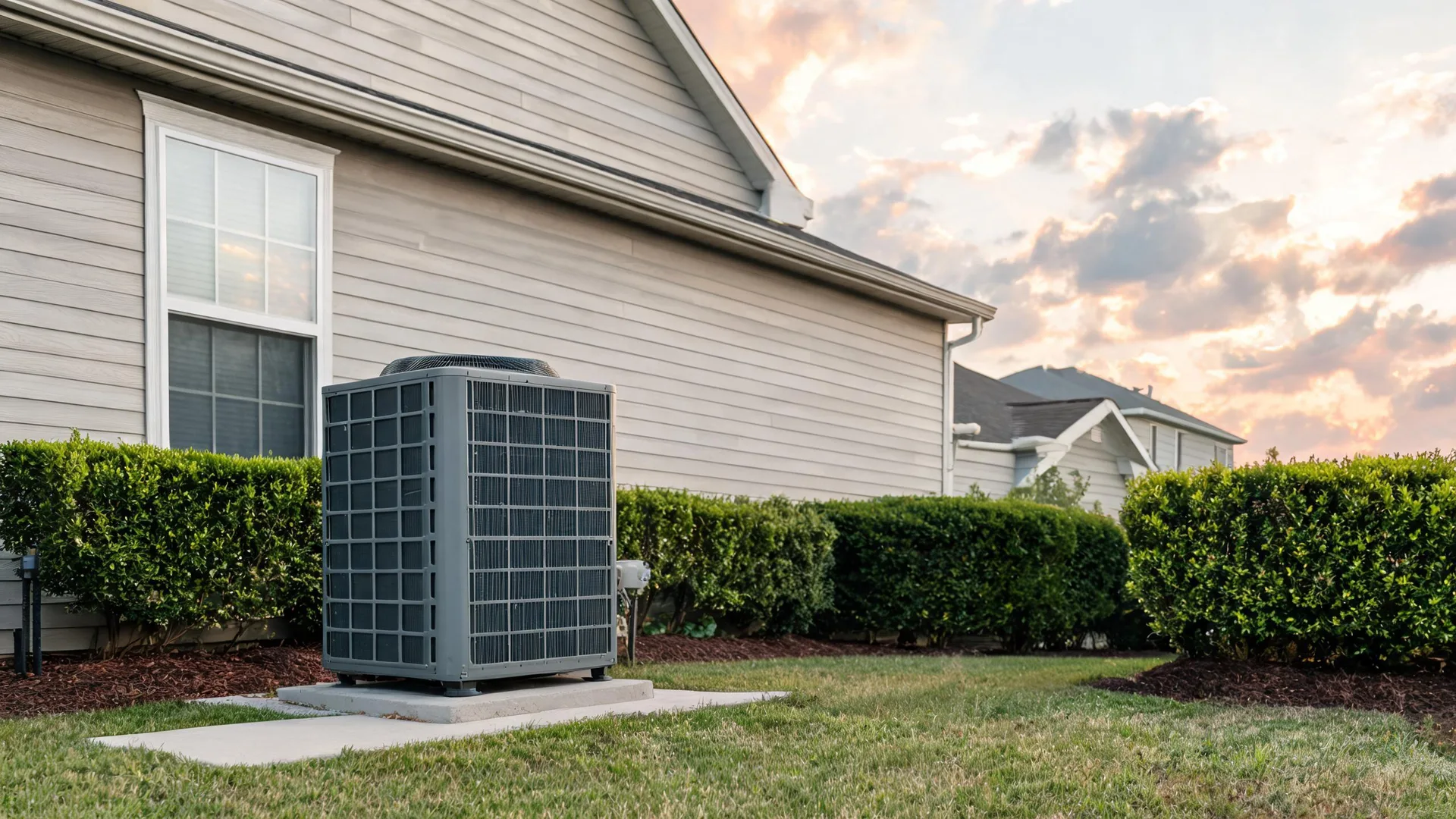
A residential heat pump outdoor unit mounted on a concrete pad next to a house with gray vinyl siding.

An older house changes what the install has to get right

Half the homes in Ionia County were built in 1972 or earlier. A house that old was built with a furnace in mind, and the ductwork may never have been sized for anything else. A heat pump moves more air at a lower temperature than a gas furnace does, so ducts that worked fine for decades of gas heat can end up the wrong size for the new unit. That's a question for whoever installs it, not a guess you make yourself. If your ducts came with the house, have them checked before the new system goes in, not after.

The rating is one number for a range of conditions

A heat pump's rating gets built from testing across a range of outdoor temperatures, then boiled down to one figure. Run the unit on a mild day and it will beat that number. Run it on the coldest night of the year and it will fall short, because every heat pump loses capacity as the air outside gets colder. The rating tells you how the machine compares to another machine, not what your own bill will look like.
A higher rating can't fix the wrong size

Units carrying the same rating can perform completely differently in your house, because the rating says nothing about whether the unit matches the space it's heating and cooling. A unit too big for the house cycles on and off instead of running steady, and that short cycling wears on the compressor and leaves rooms uneven. A unit too small runs constantly and still can't keep up when it's coldest out. Sizing comes from a load calculation on your house, not from the number on the label.

What drives the cost of an install is mostly what has to change beyond the unit itself. The outdoor and indoor units are only part of it. If the ductwork needs resizing, or new refrigerant lines have to be run, or the electrical panel doesn't have room for a new circuit, each of those is its own job on top of the equipment. A straight swap, same place, same connections, same ducts, costs less than a system that needs a backup heat source added or a thermostat rewired for staged operation. Removing and hauling off the old equipment is part of the job too. The equipment itself varies by its capacity and features, but labor is often the bigger swing, because every house hides a different amount of work behind the walls.

Installation day starts with the old equipment coming out. The outdoor unit gets disconnected, the refrigerant lines drained, and the old furnace or air handler removed if one is involved. Setting the new outdoor unit is usually the quick part. It sits on a pad and gets leveled. The slower work happens inside, running refrigerant lines, wiring the thermostat, checking that the ductwork actually moves the air the new unit is built to push. Once everything is connected, the system gets charged with refrigerant and run through both heating and cooling so the contractor can check pressures and airflow before calling it finished. A straightforward swap can wrap in a day. Work on the ductwork or the electrical panel usually stretches it longer.