






Three lit brick homes on a tree-lined residential street photographed at dusk.

Heat Pump Installation in Holland, MI

Tell us about the job

Takes about a minute. No obligation.

New system or replacementHeat PumpOttawa County, MI
Step 1 of 2

What ZIP code is the job in?

Electricity in Michigan runs 19.30 cents per kilowatt-hour. A heat pump moves heat instead of burning fuel to make it, so it gets more warmth out of every kilowatt than a furnace gets out of a therm, but that efficiency isn't fixed. It comes from the compressor, the coils, and how well the unit matches the heat loss of your house. A system sized and installed right keeps earning that rate back all winter. One that's oversized or badly charged will cycle more and cost more on the same bill, in the same house, under the same price per kilowatt-hour.

8 months
October through May, your system heats
3 months
June through August, it cools
20°F
the average winter night it heats against
81°F
the average summer afternoon it cools against
Isometric cutaway illustration of a small house showing ducted air distribution, an indoor air handler, and an outdoor condenser unit connected by lines, with a sofa and bed in the rooms.
Your system heats October through May and cools June through August.

NOAA nClimDiv, 1991–2020 normals

A heat pump that's too big shuts off before it pulls moisture out of the air.

Short cycles like that mean a clammy house and a compressor that wears out early.

Most of Holland heats with gas, which changes what a heat pump needs to do here

83.9% of homes heat with gas
35 damaging wind events from 2015 to 2024
17 winter storms from 2015 to 2024
Get it in before OctoberHeat runs here from October through May. Install in September and it's not a rush job.

Ottawa County sits in climate zone 5A, a cool zone where heating is the bigger job over the year. Any split-system heat pump installed here new has to meet 14.3 SEER2 for cooling and 7.5 HSPF2 for heating, the federal minimum since January 2023. That HSPF2 number matters more here than the cooling rating, since this is a heating-dominant zone. A contractor sizing your system has to work within those minimums, not below them. What's worth comparing is how far above that floor a given system sits, since that's where the real difference in running cost shows up.

This climate doesn't demand the priciest system, just a well-matched one

Overnight lows here average 20°F through December, January and February. That's cold, but it's not extreme, and a heat pump spends most of its winter working against that moderate number, not against deep cold snaps. A well-built system sized to match this house can handle it without reaching for the top of the efficiency lineup.

Find a contractor
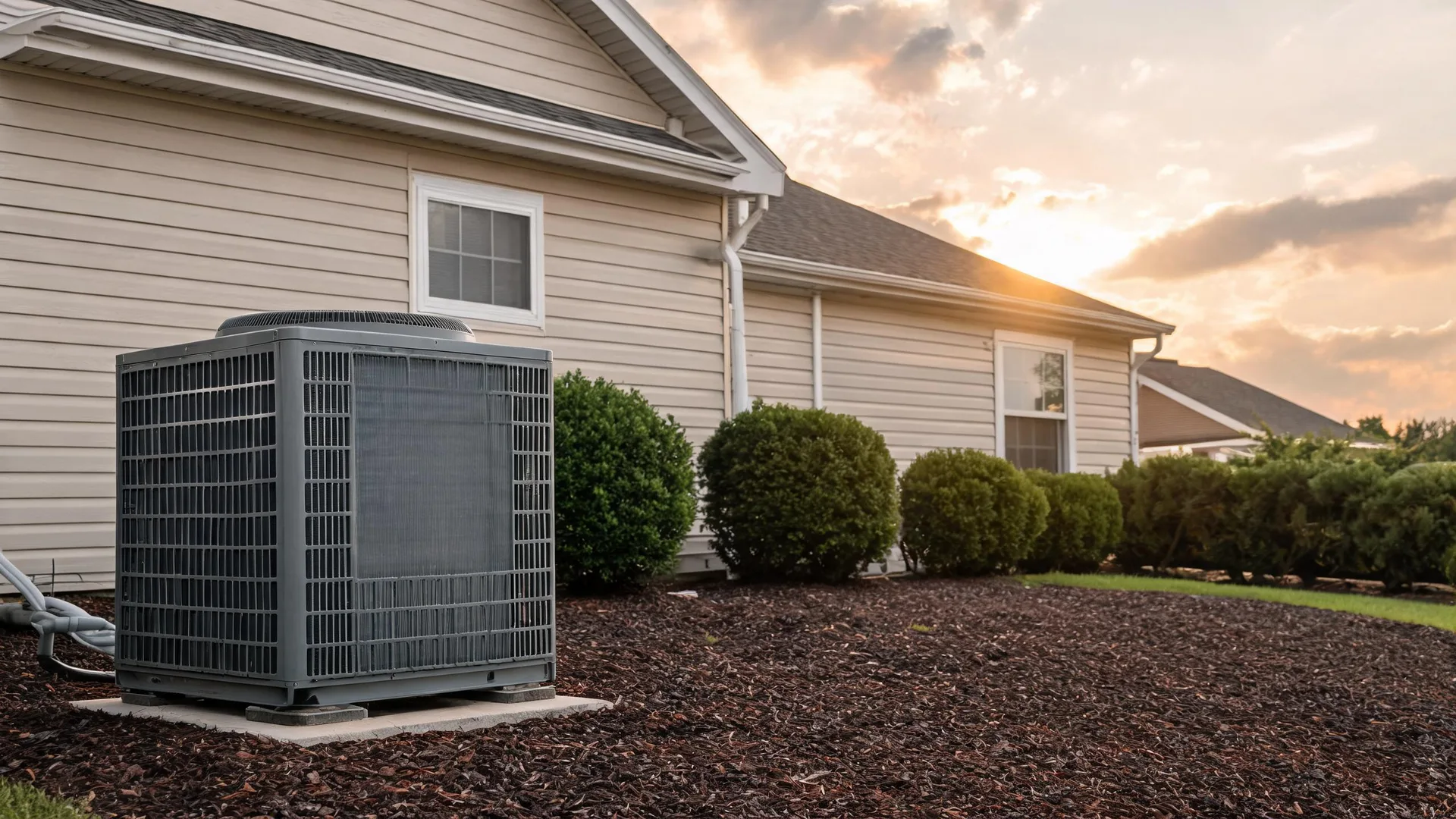
A gray heat pump outdoor unit mounted on a concrete pad next to a residential house with lap siding and stone accents.

The load it runs against most nights is mild

A heat pump here spends the winter working against an overnight average of 20°F, not against deep cold snaps. Wind and snow storms show up in Ottawa County most years, but those are short events, not what the system runs against night after night. The steady load is the mild one. A well-built system sized right for this house can meet that load without reaching for the top of the efficiency lineup.

The old furnace usually stays

A heat pump handles most of the heating on its own, but a lot of installs keep the furnace as backup for the coldest stretches, wired into the same ductwork so the system switches over on its own. If yours is already old or the heat exchanger is cracked, this is the point to pull it rather than pay to connect something that's near the end of its life.
The old AC comes out

The outdoor condenser and the indoor coil get disconnected and hauled off, and the refrigerant lines get reused or replaced depending on their condition. A straight swap is quick work. If the ductwork or electrical panel needs changes to run the new system, that adds steps, and it's worth asking upfront what your install actually needs.

A few things move the price on any heat pump install, apart from the equipment itself. Sizing takes real calculation, not a guess based on square footage, and a contractor has to measure the heat loss of your house to get it right. If the ductwork is undersized or leaky, that gets fixed or it undercuts the whole system, and duct work takes time. The electrical panel either has capacity for the new circuit or it doesn't, and if it doesn't, that's its own job. Keeping the old furnace as backup means tying it into the same controls, which is more work than a straight swap. None of this is optional add-on work. It's what makes the system actually perform at the rating on the label.

Install day starts with the outdoor unit and the indoor coil, not with paperwork. The old condenser gets disconnected and set aside, and if the furnace is staying as backup, its wiring gets tied into a new control board that can run both. Refrigerant lines get pressure tested before anything gets charged, because a line set that leaks slowly will ruin a compressor over a season without ever throwing an obvious fault. Once the new coil and condenser are set, the system gets charged to the manufacturer's spec and the airflow gets checked against the duct system it's tied into. A heat pump that's low on charge or starved for airflow will run long and still underheat, and that shows up in the first cold week, not on install day itself. Most of the work is this checking, not the setting of equipment.