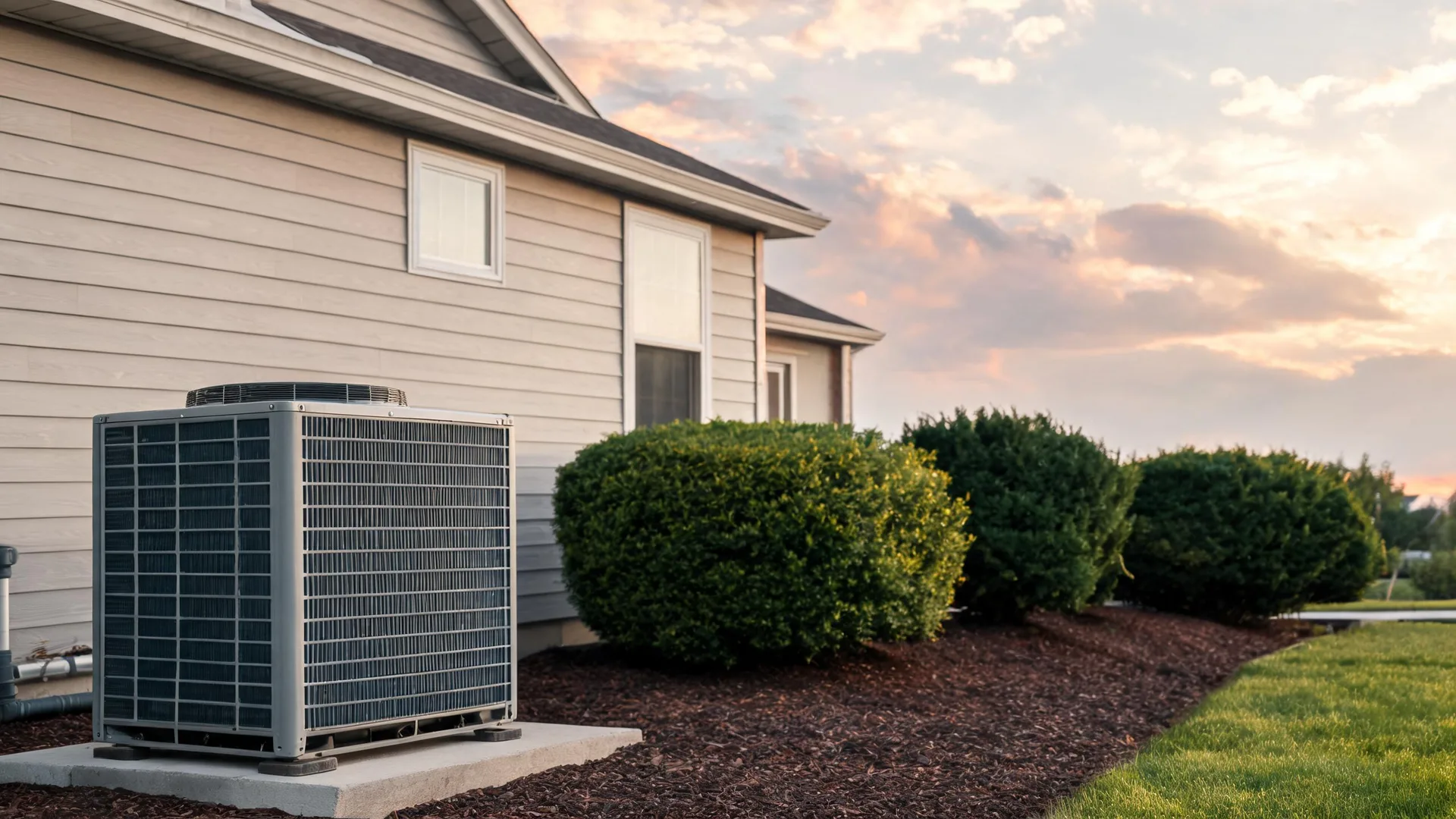
Electricity here runs 20.43 cents a kilowatt-hour
Mecosta County pays more for power than most US counties. A heat pump runs on electricity for every degree of heating and cooling it produces, so that rate applies to the system all year.
Takes about a minute. No obligation.
Mecosta County pays more for power than most US counties. A heat pump runs on electricity for every degree of heating and cooling it produces, so that rate applies to the system all year.
Two heat pumps can heat the same house and use different amounts of power doing it. At this rate, the difference between a system that runs efficiently and one that doesn't shows up on the bill long after installation day.

NOAA nClimDiv, 1991–2020 normals
Gas heats close to half the homes in Mecosta County.
A heat pump installed alongside that furnace takes over the mild days and lets the furnace handle the cold snaps.




August is the month to get this done, before heat season starts in September. Install it now and whoever does the work can size it, test it and run it through its paces without a deadline pressing on them. Wait until the first cold snap and you're calling around in a panic with the temperature already dropping, taking whatever appointment and whatever system is on hand. Heat runs here from September through May, nine months of the year, so a system that isn't set up right doesn't get a break to catch the problem before the hard cold hits. Overnight lows average 16°F across December, January and February, and that's not when you want to find out something was off from day one.
The system going in now is the one that bill runs through for years. Get the sizing and the setup right at install, and efficiency is working for you from the first month, not something to fix later.
Find a contractor
That lighter load is what this section is about, not the storms. A system here isn't straining to heat or cool most of the year, so parts wear at their own pace rather than being pushed. That changes what's worth paying for at install. Put the money into a unit sized and set up right rather than chasing the top efficiency tier, since it was never going to run hard enough here to earn that difference back.
Sizing a heat pump off the furnace it's replacing, or off square footage alone, skips the load calculation that accounts for insulation, windows and duct layout. A unit sized too big short cycles and never runs long enough to dehumidify or reach steady output. One sized too small runs constantly and leans hard on backup heat. Ask whoever quotes the job to walk through the load calculation with you, not just hand over a model number.
Every heat pump has a temperature where it can no longer pull enough heat from the outdoor air to keep up, and backup heat has to take over. That balance point depends on the unit's low-temperature performance and how the installer sets the controls, not just the size of the system. A system with a balance point set too high hands off to backup heat more often than it needs to, and backup heat usually costs more to run. Ask what temperature the system is set to switch over, and why.
The cost of putting in a heat pump comes down to what the job takes, not just what the unit costs sitting on a shelf. A straightforward swap, same location, same ductwork, existing electrical already in place, goes faster than one where the line set has to run further or the electrical panel needs work to carry the new load. Ductwork matters too. If the ducts were sized for a furnace and need modification to move the right air across a heat pump's longer, gentler cycles, that's labor the quote has to carry. Refrigerant line length, how the indoor and outdoor units get mounted, whether a disconnect or new breaker is needed, all of it adds up before anyone talks about the equipment itself. The unit matters less than whether the person installing it takes the time to match it to the house.
Mecosta County falls under zone 6A, a cold climate zone with a long heating season. Any split-system heat pump manufactured on or after January 1, 2023 has to meet the federal minimum for that climate: at least 14.3 Btu of cooling for every watt-hour of electricity it uses over the summer, and at least 7.5 Btu of heating for every watt-hour over the winter. That floor narrows what can legally go into this house. A federal tax credit is available on top of that for units that qualify, which is worth asking about before you settle on a model.