






A nighttime street view of several illuminated two-story red brick homes with front porches, flanked by a large tree.

Heat Pump Installation in Bay City, MI

Tell us about the job

Takes about a minute. No obligation.

New system or replacementHeat PumpBay County, MI
Step 1 of 2

What ZIP code is the job in?

Electricity in Michigan ran 19.30 cents per kilowatthour in 2024. A heat pump moves heat instead of burning gas to make it, so it gets more out of every kilowatthour than baseboard or resistance heat does, but it still runs on that same meter. At that rate, the efficiency rating on the unit you install matters more than it would somewhere power is cheap. A higher-efficiency model costs more going in, and it keeps costing less on every bill after. Ask what HSPF or SEER2 rating a contractor is quoting and hold two options side by side before deciding.

8 months
October through May, your system heats
3 months
June through August, it cools
18°F
the average winter night it heats against
80°F
the average summer afternoon it cools against
Isometric line illustration of a cutaway house showing interior rooms with furniture, ceiling ductwork, and an outdoor condenser unit connected by lines along the exterior wall.
Your system heats October through May and cools June through August.

NOAA nClimDiv, 1991–2020 normals

Heat pumps here get replaced ahead of October, before the heat gets switched on for the eight months it runs.

Scheduling the install in September means it's done before you need it, not fixed in a rush once it's cold.

Most homes in Bay City run on gas, which makes a heat pump a different kind of choice

78% of homes heat with gas
Climate zone 5A
Power costs 19.3 cents a kWh statewide

Bay County winters average an overnight low around 18°F. That's cold enough to run a heat pump all winter, but it isn't the deep cold that pushes a system to its limit. The county does get hit with damaging wind and the occasional winter storm, but that's weather working on the house and the ductwork outside, not something the heat pump itself has to fight. So the unit doesn't need to be the top cold-climate model built for places that see real extremes. A correctly sized system built for zone 5A will hold up fine here. What matters more is that it's installed right and sized to the house, not that it's rated for weather this county doesn't get.

Zone 5A sets the minimum efficiency your new heat pump has to meet

Any heat pump installed in Bay County has to meet the zone 5A minimum, 14.3 SEER2 and 7.5 HSPF2. That floor is what a contractor can legally install, not a target to beat. A system that meets it also qualifies for the federal tax credit available now. Ask which models on the table clear the minimum by more, since that's where the better rating sits.

Find a contractor
A man in a navy long-sleeve shirt and tan pants carries a canvas tool bag up concrete steps toward a dark blue front door flanked by columns and a potted shrub.
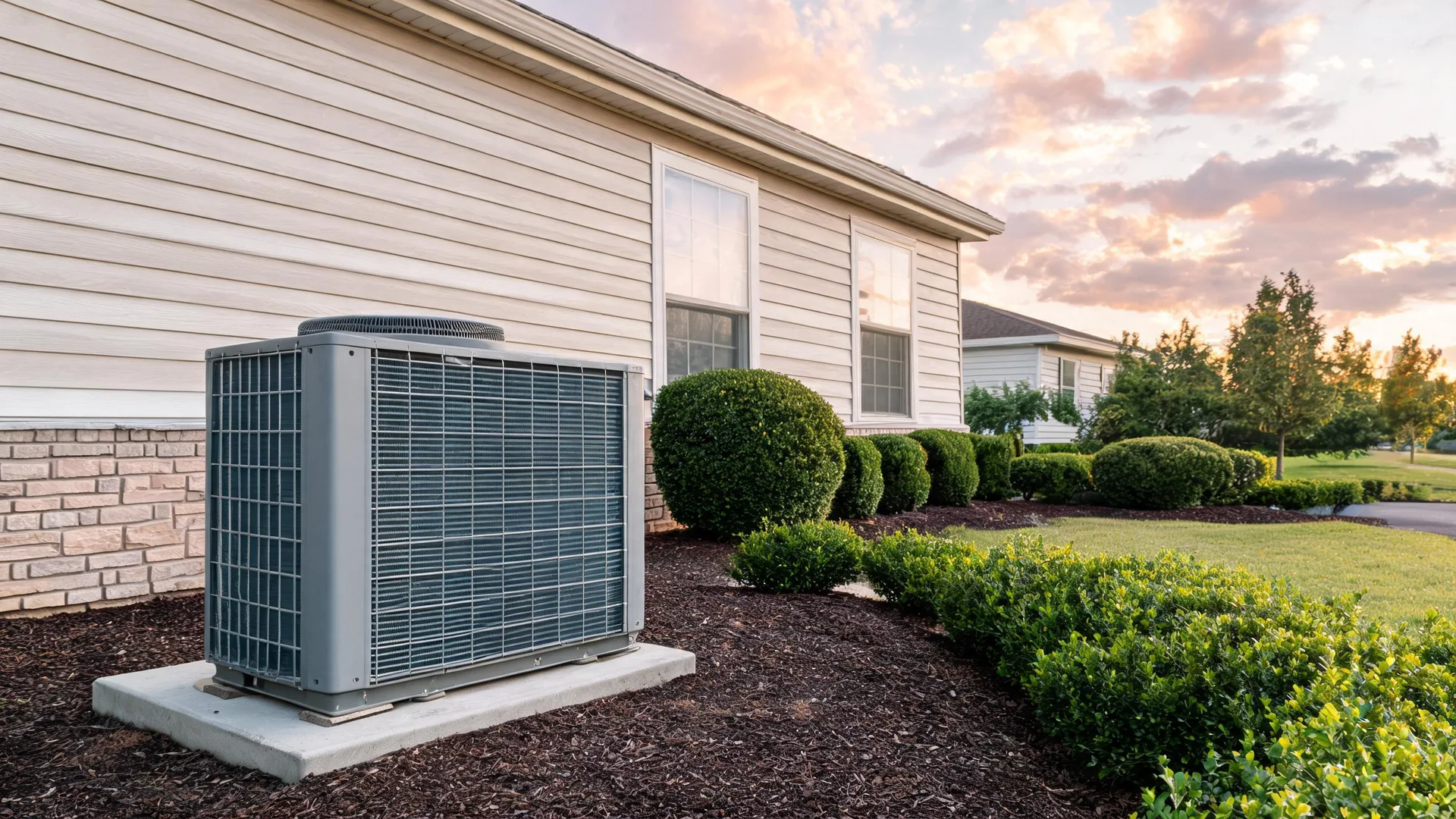
A gray heat pump outdoor unit mounted on a concrete pad next to a residential house with lap siding and stone accents.

An older home needs a system sized to what it already has

Half the homes in Bay County were built in 1963 or earlier. A heat pump going into a house that old is going into ductwork and a layout built for a different kind of system, often a gas furnace with its own duct sizing and return setup. The new equipment has to match what's actually there, not just the square footage. That's worth a careful look before anything gets installed, not an assumption that any system fits any duct.

The old system doesn't get reused

A gas furnace coming out isn't repurposed as backup heat. Once the ductwork is matched to the new heat pump and the refrigerant lines are run, the furnace is disconnected and hauled off, along with the old condenser or heat pump outside if there was one. The gas line it ran on gets capped off by whoever handles that part of the job.
What that means for the job

Removal and disposal is its own piece of the work, separate from setting the new unit and connecting it. Ask whether hauling off the old equipment is included in a quote or billed on top, since contractors handle it differently. If the old furnace shares a flue or venting with a water heater, that gets checked too, since pulling one system out can change what the other needs to vent safely.

A heat pump sized wrong doesn't fail the way a furnace does. Too big and it blasts the house up to temperature fast, shuts off, and starts again a few minutes later. That short cycling never lets it run long enough to pull moisture out of the air, so the house ends up warm and damp instead of just comfortable. Too small and it runs constantly in the coldest stretch, falling behind and leaning hard on backup heat strips to make up the difference. Getting it right means a contractor works out a heat loss and heat gain calculation on the house, room by room, rather than pricing off the old system's size or the square footage alone. The number that comes out of that calculation is what the equipment gets matched to, not the other way around.

The equipment itself is only part of what a contractor quotes. A heat pump install means running new refrigerant lines between the outdoor unit and the indoor coil, and if the old lines don't match what the new system needs, those get replaced rather than reused. The electrical side matters too. A heat pump often draws differently than what was there before, especially if backup heat strips are part of the system, and that can mean upgrading the circuit or the breaker panel to carry it. Where the outdoor unit goes and how the indoor coil ties into the existing ductwork takes labor that has nothing to do with the price tag on the equipment. The same model installed in different houses can turn into very different jobs once a contractor sees what's already in place.