A two-story dark-painted house with a covered front porch, white-trimmed windows and a trimmed hedge, framed by large deciduous trees, photographed from ground level across a lawn with blurred grass in the foreground.

Furnace Repair in Grand Rapids, MI

Tell us about the job

Takes about a minute. No obligation.

RepairFurnace or heatingKent County, MI
Step 1 of 2

What ZIP code is the job in?

Kent County sees real storm damage

Kent County recorded 90 severe weather events between 2015 and 2024, including 56 damaging wind events, 11 hail events and 8 tornadoes. That kind of weather doesn't stay outside. Wind-driven debris and hail reach outdoor equipment and electrical connections tied to your heating system.
Power doesn't always come back fast

More than a third of Michigan households went at least 24 hours without power in 2024. A furnace needs electricity to run even when it burns gas, from the control board to the blower motor. When the power's out that long in a Grand Rapids winter, the furnace isn't the only thing you're worried about.

8 months
October through May, your furnace is on duty
19°F
the average winter night it heats against
82%
of homes here heat with gas, so most furnaces here burn gas
15 winter storms
in ten years, the nights a failure hurts most
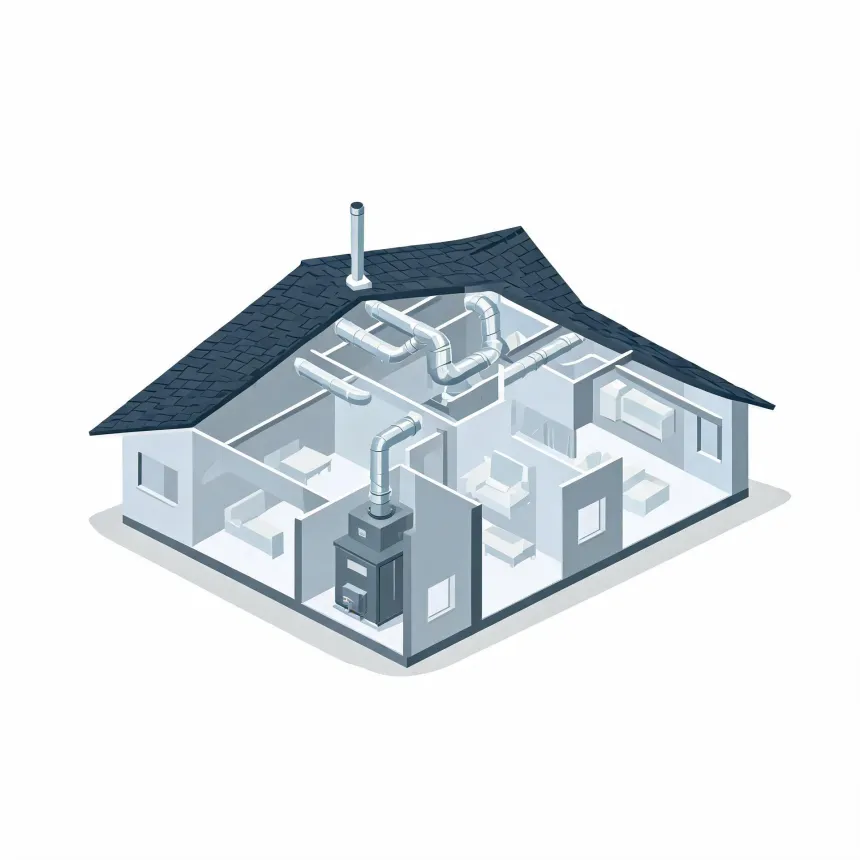
Isometric cutaway illustration of a single-story house showing interior rooms with furniture, a metal ductwork network, and a furnace unit connected to a vertical flue through the dark shingled roof.
Your furnace works hardest from November through March.

NOAA nClimDiv, 1991–2020 normals

Furnaces in Kent County start working in October and keep going through May.

A part that was already weak all summer tends to fail in those first cold weeks, not in the dead of January.

Eight months of heat a year wears a furnace down faster than people expect

Heat runs October through May
Winter nights average 19°F
Climate zone 5A

If your furnace has been acting up, get the actual cause found before anything gets replaced. A technician can tell you whether it's a cracked heat exchanger, a failing igniter, a clogged flue, or something electrical tied to the control board. Guessing costs more in the long run, especially on a system that already runs eight months of the year here. A repair done without a real diagnosis tends to come back, often at a worse time than this one.

If a storm has come through, get the furnace checked too

Hail and wind-driven debris don't stop at the roof. If your system has been through a bad storm, have it looked at even if it's still running. A technician can check the connections and the outdoor unit while they're already finding what's wrong with the furnace.

Find a contractor
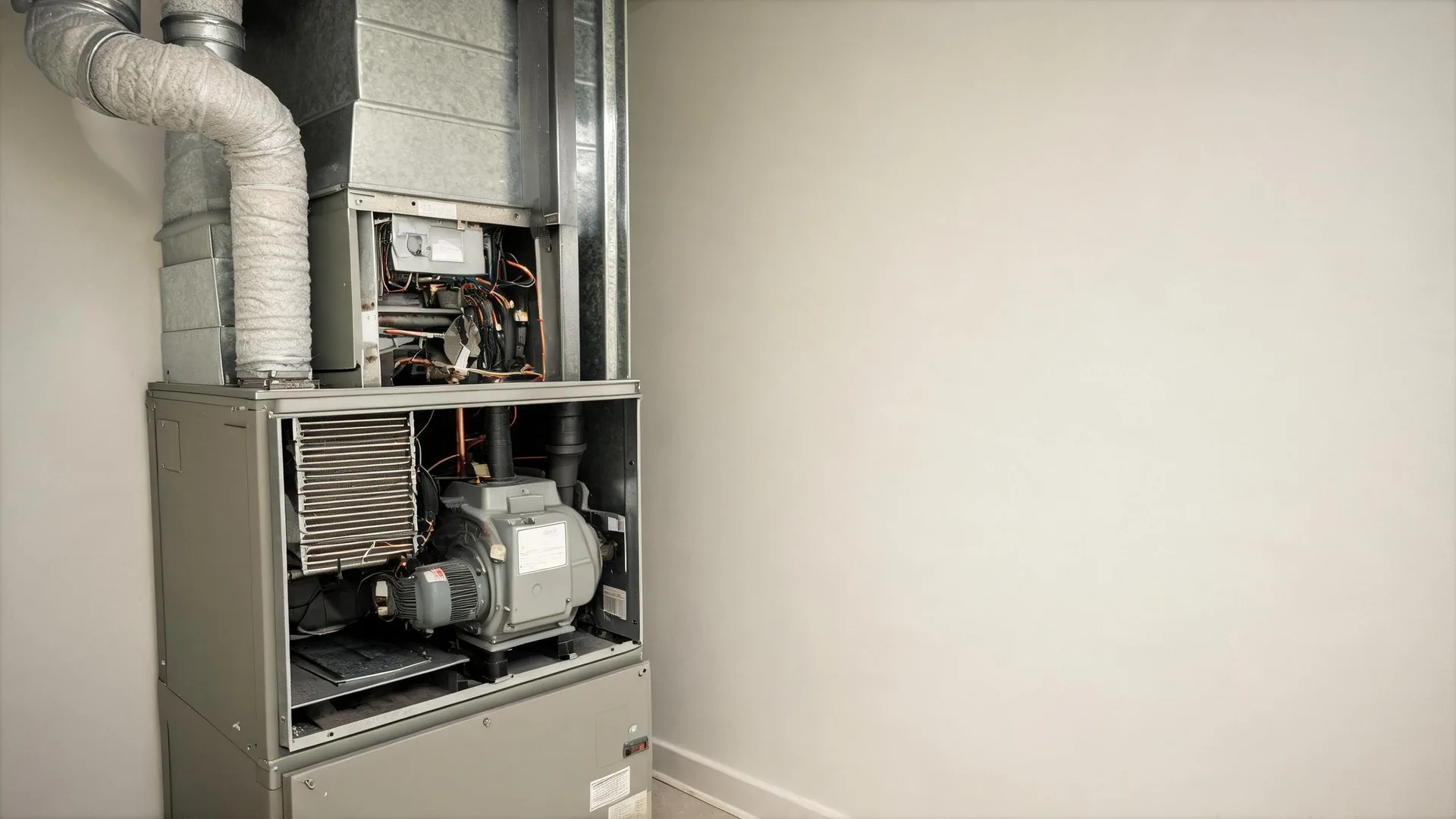
A gray gas furnace with attached ductwork and piping installed in an unfinished concrete basement.

What to check before you call

Before anyone comes out, check the thermostat first. Make sure it's set to heat, not cool, and that the set temperature is actually above room temperature. A dead thermostat display usually means batteries, and that's a two minute fix. Next, go look at the filter. Pull it out and hold it up to a light. If you can't see light through it, it's choking the system, and a furnace that can't pull air through a clogged filter will often shut itself down to protect the heat exchanger. Check the air vents and returns around the house too. Furniture or boxes pushed in front of a return can starve the blower the same way a dirty filter does. Then find the switch that looks like a light switch on or near the furnace itself, sometimes on a nearby wall. That's the power switch, and it gets bumped off by accident more often than people expect. Last, check the breaker panel. A tripped breaker only needs to be flipped back once. If it trips again right away, stop and leave it alone, because that's telling you something is pulling too much current and resetting it again won't fix that. If the furnace runs but doesn't get warm, or it's making a new noise, or you smell something, those aren't things to chase down yourself. That's the point where a technician needs to look at it.

Most failures start with ignition or airflow

A furnace that won't light usually comes down to the igniter, the flame sensor, or the pressure switch that confirms the inducer motor is pulling exhaust correctly. A furnace that lights but won't keep running often has a flame sensor coated with residue, so it can't confirm there's a flame and shuts the gas back off as a safety measure. Airflow problems show up differently, with short cycling or a blower that won't stop, and those usually trace back to something restricting air rather than the burners themselves.

Age takes the heat exchanger and the control board

The heat exchanger is the part that takes the most punishment over the life of a furnace, heating and cooling every cycle until metal fatigue opens a crack. That's not a part anyone patches, because a cracked exchanger can let combustion gases into the air a home breathes. Control boards fail for a different reason, usually a power surge or a connection that's corroded or worked loose, and when one goes bad the furnace can stop responding to the thermostat entirely or cycle in ways that don't make sense.

An unfinished basement containing a gas furnace with ductwork in the foreground and miscellaneous stored items along the far concrete wall.

A new furnace would cut about $150 a year off heating for a typical Kent County home.

  • A new high-efficiency furnace$600 a year
  • An older furnace$750 a year

Estimates for a typical Kent County home, compared with an older unit built to the previous federal minimum, from EIA household energy data, Michigan fuel prices and NOAA climate normals. Your home will differ.

Repair makes sense when one part has failed and the heat exchanger is sound.

Replacement makes sense when the heat exchanger is cracked or the furnace keeps needing parts.

A repair is worth it when the problem is one part, not the whole system working against itself. A new igniter or flame sensor fixes a furnace that otherwise runs fine. The same goes for a control board, as long as the heat exchanger underneath it is sound. What tips a furnace toward replacement is when the big, expensive parts start going at the same time the small ones do, or when the heat exchanger itself is the problem, since nobody patches a crack in that part. A technician checking one failure can usually tell you whether the rest of the system is aging alongside it or still has years in it. That answer matters more than the repair in front of you.