Why your gas furnace won't light in Grand Rapids, MI

Get the furnace repair search off your mind today.

Hand off the search

Why won't my gas furnace light in Grand Rapids?

It's cold, you need the heat running, and the furnace just clicks and clicks without lighting, or it tries and the flame won't stay. In Kent County that's not a small thing to ignore once winter sets in and temperatures stay low for months. There's usually a specific part behind it, not a mystery, and knowing roughly what's going on helps you talk to whoever comes to look at it.

Usually the igniter, the flame sensor, or the gas valve

Most of the time a furnace that won't light has a worn-out igniter, a flame sensor coated with residue, or a gas valve that isn't opening the way it should. The igniter is the most common culprit since it has a limited lifespan and simply burns out after enough winters of use. A dirty flame sensor will let the furnace light briefly, then shut itself off, which can look like it's not lighting at all. Gas supply problems are less common but matter more, since a closed valve or a tripped safety switch can stop ignition entirely. With Kent County winters running cold for months, a furnace stuck in this cycle needs attention quickly rather than left to keep trying and failing on its own.

A woman with long light-brown hair in a gray knit sweater sits in a living room looking off to the side, with a sectional sofa, houseplant, lamp, wooden table and large windows behind her.
A woman in a chunky gray turtleneck sweater sits indoors looking off to the side, with a blurred dining table, chairs, pendant lamp and window behind her.
A woman in a cream knit sweater with her hair in a bun stands near a window, looking off to the side, with a gray sofa, houseplant and open kitchen with pendant lights blurred behind her.
A woman with long brown hair in a cream knit sweater stands near a window, looking to the side, with a white sofa, shelving, and a hallway visible behind her.

What's going on when your furnace won't fire up

You hear the clicking start, maybe three or four times, then it stops and the house stays cold. Or it lights for a second and the flame drops out right after. The blower might still kick on and blow room-temperature air through the vents, which fools some people into thinking the furnace is working. Check the thermostat and it's set right, but the temperature in the house keeps dropping anyway. You might catch a faint gas smell near the furnace for a moment when it tries to light. Left alone through a cold snap, pipes in unheated parts of the house, a crawlspace or an exterior wall, are what's at risk once the house can't hold heat.

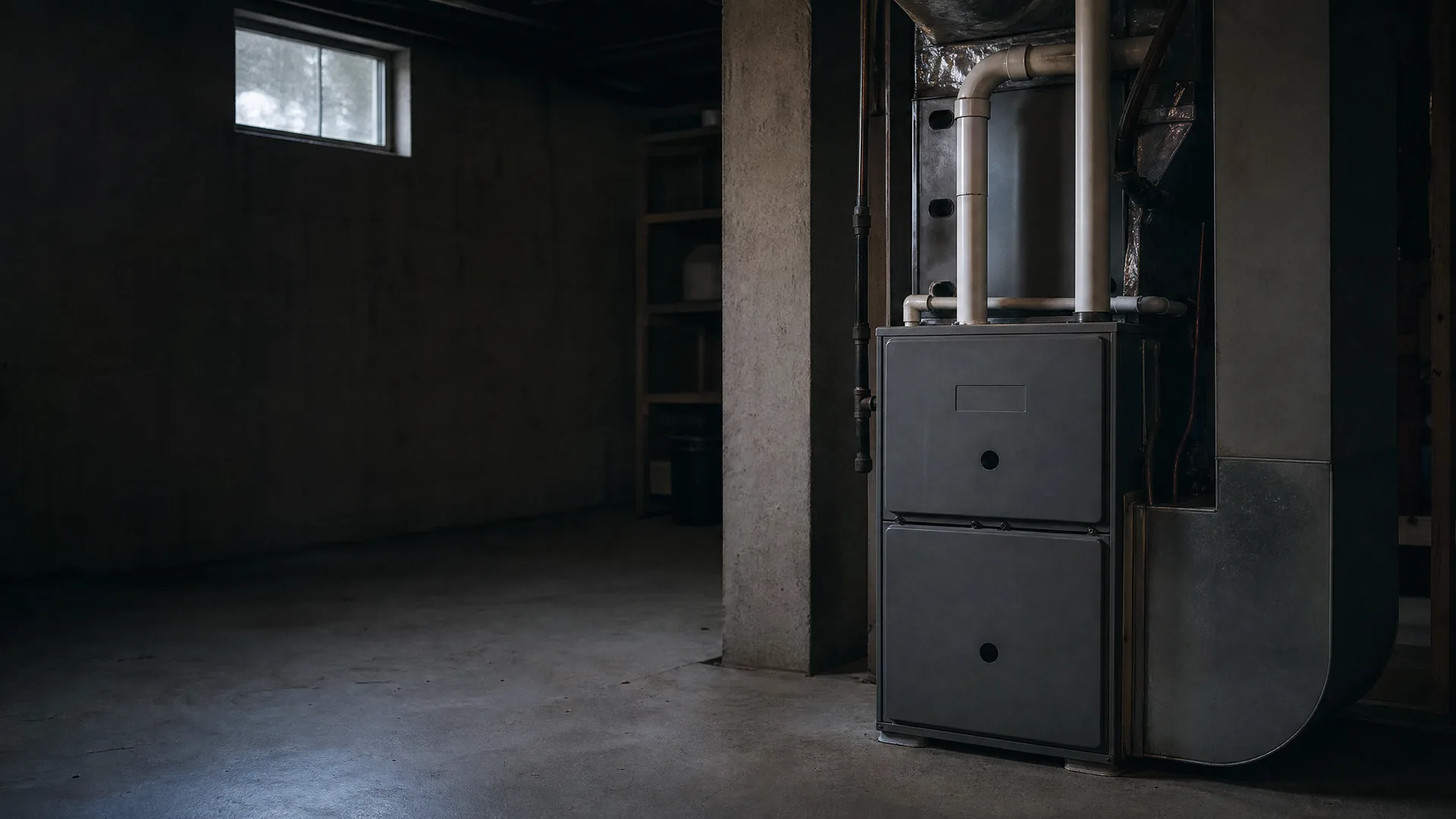
A gray high-efficiency furnace with white PVC vent pipes and attached ductwork stands beside a concrete support column in a dim, empty basement with bare concrete walls and floor and a small window.

You go down to the basement a little after six, the sky already dark the way it gets in November. The furnace sits against the wall, quiet. No hum, no blower, none of the usual sound you stopped noticing years ago until it's gone. You crouch by the access panel and catch the dust hanging in the flashlight beam, stirred up from behind the unit. You press the reset switch and wait. A click, then another, then nothing. The basement holds the kind of cold that settles into concrete floors in Kent County this time of year. Upstairs the thermostat still reads the temperature from an hour ago. You stand there a minute longer, listening for a sound that doesn't come.

Call Now or Wait It Out

Call for repair tonight

  • If the furnace clicks and won't light at all, you have no heat right now and that's a Kent County winter night with nobody warm.
  • A furnace that lights then drops the flame within seconds has a safety switch cutting it off on purpose, and it will keep doing that until the part behind it is fixed.
  • Waiting a day to see if it fixes itself usually means waiting through a night in the 20s or colder with the thermostat doing nothing.
  • A repair call gets a licensed furnace tech looking at the igniter, the flame sensor or the gas valve the same way they've seen fail on this same furnace brand before.
  • If the furnace is still under warranty or just a few years old, a repair gets it running again without starting over on a new unit.

Wait and watch it

  • If the furnace lit fine yesterday and today it's just slow to catch, sometimes a reset at the breaker is enough before anyone needs to come out.
  • A furnace that's audibly trying, clicking and humming but not catching, is different from one that's completely silent, and the silent one usually can't wait.
  • Watching it a day only makes sense if you have another way to keep the house warm, like a working fireplace or space heaters you trust running overnight.
  • If this is the second or third time this furnace has failed to light this winter, waiting again just delays a repair that's going to happen anyway.
  • An older furnace that struggles to light more than once a season is usually telling you the part failing is close to the end, not having a one-off bad night.
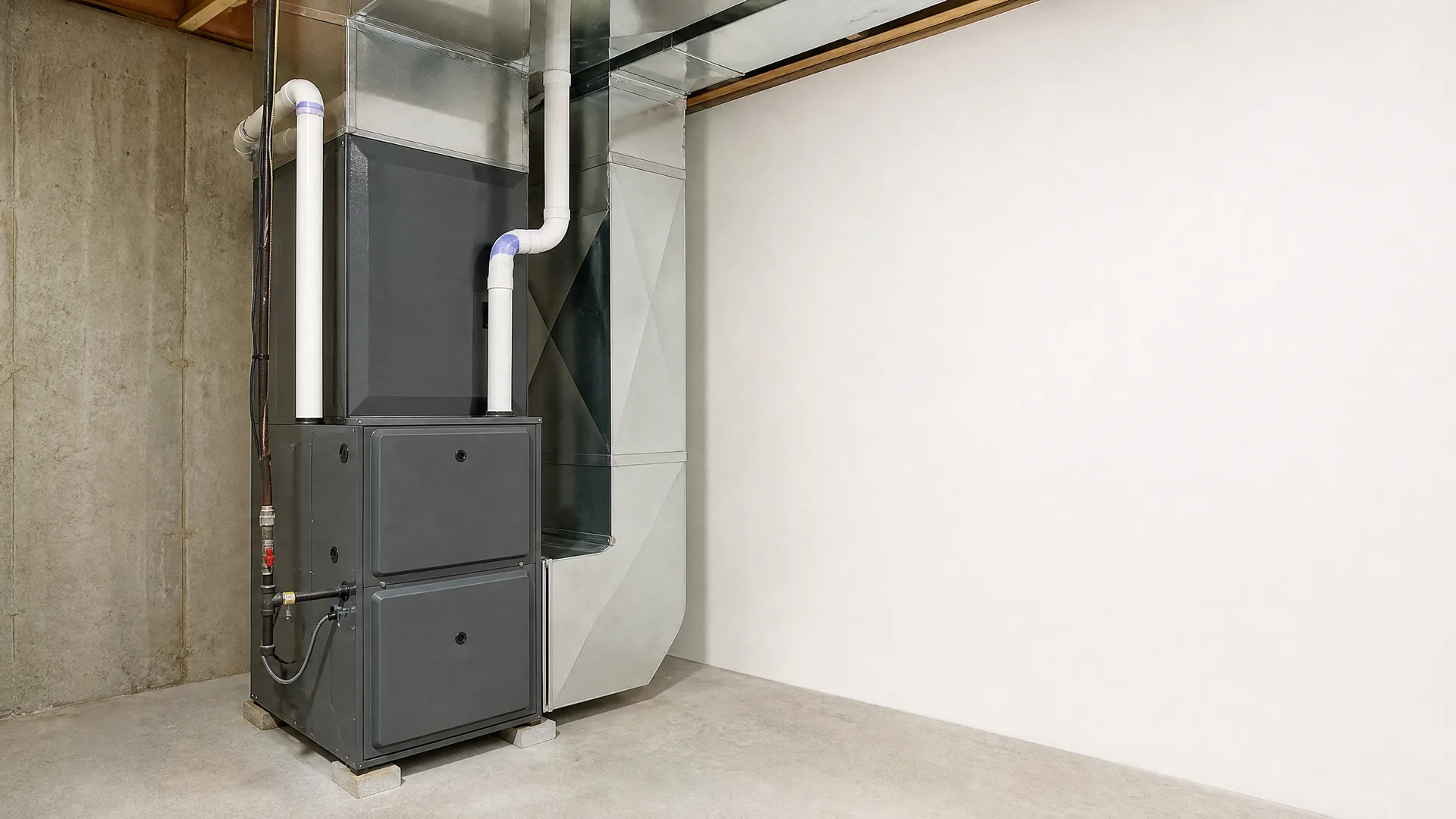
A dark gray high-efficiency furnace with white PVC vent pipes stands against a concrete basement wall, connected to sheet-metal ductwork running along the ceiling joists.

The igniter wears out with age

Most furnaces now use a hot surface igniter instead of a standing pilot. It is a small ceramic strip that glows to light the gas, and it takes that heat cycle over and over every time the furnace calls for heat. Over a few winters the ceramic gets brittle and cracks, or it just stops heating up enough to catch the gas. When it fails, the furnace still tries. You hear the clicking, but nothing lights, because the one part meant to start the flame can't anymore.

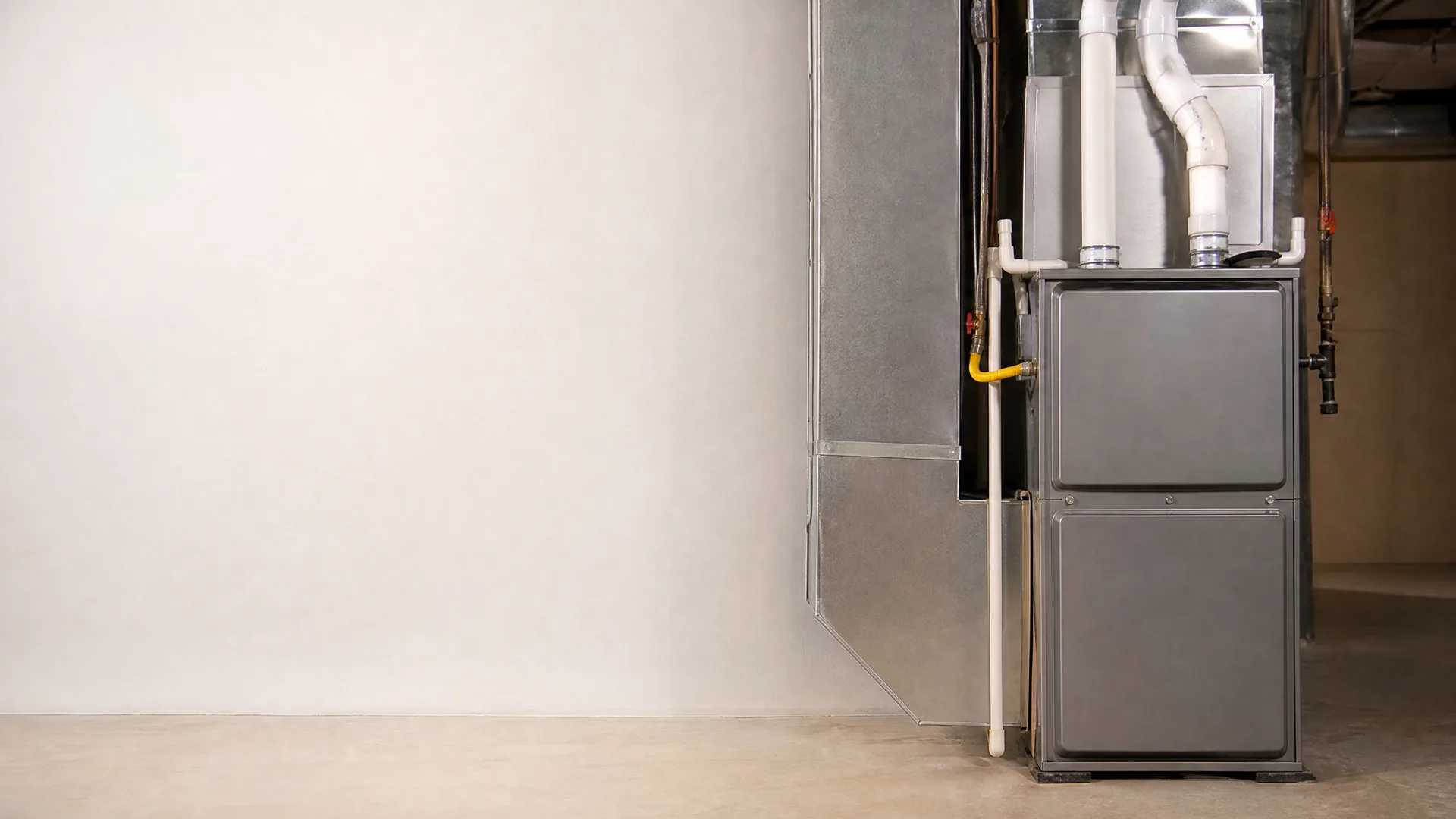
A gray high-efficiency furnace with white PVC vent pipes, a yellow gas line and metal ductwork stands against a plain light wall in a basement with a concrete floor.

A flame sensor reads dirty as none

Once the burner lights, a flame sensor has to detect it fast or the gas valve shuts back down. That sensor is a thin metal rod sitting right in the flame path, and over a season of burns it picks up a layer of soot. A sensor coated like that can't tell the furnace a flame is there at all, so the control board reads no flame and cuts the gas, even though the burner lit just fine. That's the flame that drops out seconds after it catches.

Winter nights average 19°F

At 19°F, your furnace is running most of the night just to hold the house steady. An igniter or flame sensor that's already going weak won't make it through many more of these nights without finally giving out.

NOAA nClimDiv 1991-2020

A beige high-efficiency furnace with white PVC vent pipes stands beside galvanized sheet-metal ductwork in a basement with a concrete floor, exposed wood studs, and metal piping along the wall.

Furnace lighting and running

This is what a working furnace looks like down there. Gas lights, the burners stay lit, and the flue pipe carries the exhaust out through the wall without trouble. The blower pushes warm air through the plenum into the ducts and the house holds its temperature.

An older beige furnace with a louvered vent panel stands on a concrete basement floor beside galvanized sheet-metal ductwork, a metal flue pipe and vertical pipes along a concrete wall.

Furnace won't stay lit

This older furnace clicks but the flame won't hold, or it never catches at all. The flue above it still needs a clear path for exhaust, and if the igniter or flame sensor has worn down, no amount of clicking brings the burners to life.

A gray furnace cabinet in a basement, connected to galvanized sheet-metal ductwork and white PVC pipes, against a concrete wall with exposed metal piping and insulation overhead.
Before you get your furnace repair
A gray high-efficiency furnace with two PVC vent pipes stands in an unfinished basement beside sheet-metal ductwork, a framed and plastic-covered wall, and a bare concrete wall with vertical pipes.
After you get your furnace repair
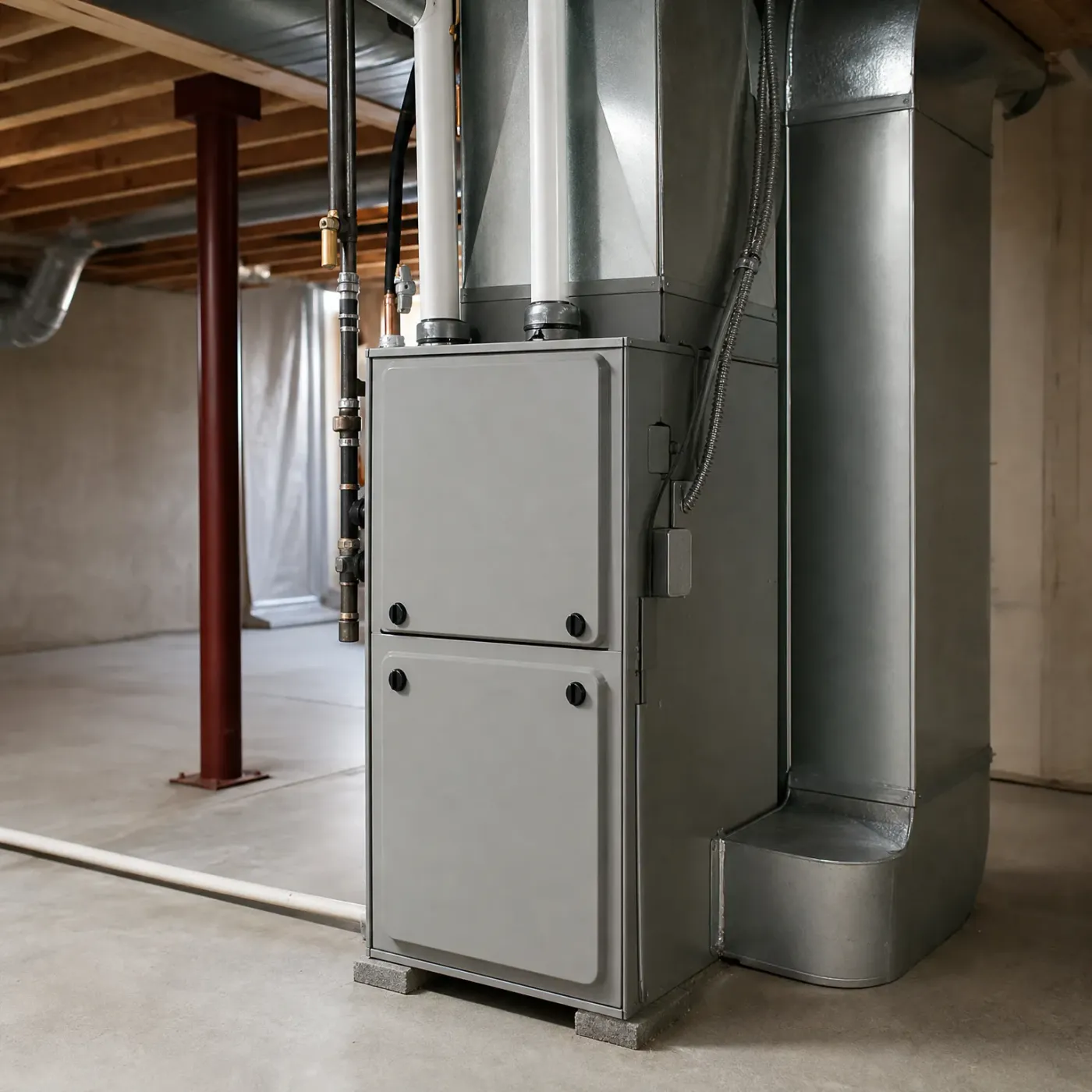
A gray high-efficiency furnace with two access panels stands on blocks in a basement, connected to sheet-metal ductwork, PVC vent pipes, flexible conduit, and gas and water piping, beside a red support column and exposed wood joists.

Hand off the search today

Only one pro gets your request, so you hear from one company.

Once you send the form, finding a pro is off your list.

Reach a local pro

There's no charge for the request.

A gray furnace cabinet in a basement with sheet-metal ductwork, white PVC vent pipes, and black gas piping against a concrete wall and wood-framed partition on a bare concrete floor.
A furnace like this lighting and running keeps burners lit steady and pushes warm air out through the plenum without any trouble.
A gray metal furnace with two white PVC vent pipes stands on a concrete floor beside galvanized sheet-metal ductwork in a basement or utility space with wood framing.
Rust and age on a furnace like this often go along with a cracked igniter or a flame sensor too corroded to sense anything.

Why does a furnace problem turn into a real emergency here

  • Winter nights average 19°F

    Overnight lows average 19°F through December, January and February, so a furnace that won't light isn't a small fix to put off until morning.

  • Heat runs October through May

    Heat runs from October through May here, about eight months of the year, which is a long stretch for an igniter or flame sensor to hold up.

  • 81.7% of homes heat with gas

    81.7% of homes in Kent County heat with gas, so a furnace that won't light is the most common way a house here loses heat.

NOAA nClimDiv 1991-2020 · ACS 2020-2024

The order a furnace fires in

  • The thermostat calls for heat and the control board checks the limit switch and pressure switch before doing anything else.
  • A draft inducer motor spins up first to pull air through the heat exchanger and prove the flue is clear.
  • A pressure switch has to detect that draft or the board stops the sequence right there, no spark, no gas.
  • Once draft is proven, the hot surface igniter glows for about 15 to 20 seconds before gas valve opens.
  • The flame sensor has about 4 seconds to detect current from the lit flame or the gas valve shuts again.
  • Three failed attempts in a row and the control board locks out and waits for the thermostat to reset the call.

A gas furnace doesn't just light. It runs through a sequence, in order, and skips no steps. The thermostat sends the call for heat down to the control board, and before anything else happens, the board checks that the limit switch and pressure switch are sitting where they should. Then the draft inducer motor comes on, pulling air through the heat exchanger and out the flue, clearing the way for exhaust that hasn't even been made yet. The pressure switch is watching for that draft. If it doesn't sense the pull, the board stops right there. No spark, no gas, nothing lights, and from the basement all you hear is that inducer motor running with nothing following it.

If draft is proven, the hot surface igniter glows white hot for 15 to 20 seconds, building up enough heat to light the gas the moment the valve opens. That part is brittle. It's also the part most likely to be the reason nothing lights at all. Once gas is flowing and the igniter has done its job, the flame sensor takes over, and it only gets about 4 seconds to confirm a flame is actually burning. No current from the sensor, and the valve closes again, same as if it never lit. A furnace won't keep trying forever. After three failed attempts back to back, the control board locks itself out and sits there until the thermostat drops the call and starts over.

A woman and a child wrapped together in a knitted gray blanket on a couch, with the child's head resting on her shoulder and a lit table lamp and houseplant in the background.
An older woman with short gray hair in a cream cable-knit turtleneck sweater smiles while looking to the side in a wooden kitchen, with a round loaf of bread on a board in the foreground and a lit candle by a dark window.

A furnace that won't light almost always comes down to the igniter, the flame sensor, or one of the switches that checks the inducer and the pressure before gas is allowed through. None of that gets fixed by waiting it out, and in Kent County a cold night makes the decision for you. What you need is someone who can get to the panel, test the right parts in the right order, and tell you straight what failed. A local contractor who works on furnaces like yours all winter has usually seen the same failure a dozen times already this season and knows where to look first. You'll be matched with one contractor, licensed to do this work in Michigan, not a handful of companies competing for your callback. That means one visit, one person who knows what they're looking at, and no juggling calls while your house sits cold. The furnace isn't broken beyond fixing. It's telling you, through the clicking or the dropped flame, exactly where to look. Someone who does this work knows how to read that and get the heat back on.

A single-story stucco house at dusk with a lit paver walkway lined by low path lights, desert plants and boulders in front, and distant mountains under an orange and blue sky.

Furnace Repair

Stop chasing a furnace pro

RepairFurnace or heatingKent County, MI
Step 1 of 2

What ZIP code is the job in?

  • A cream chunky cable-knit throw draped over a beige upholstered armchair beside a bright window, with a wooden side table holding a book and a vase of leafy branches at left.
    • Get matched with a pro who fixes furnaces in Kent County.
    • A Kent County pro who repairs furnaces gets your request.
  • Living room corner with a gray sofa holding beige pillows and a knit throw, a round wooden coffee table with a dark planter and shallow bowl, a jute rug, a floor lamp, a framed landscape print on the wall, and a window showing trees.
    • Send the request today and stop worrying about who to call.
    • Send the request and finding a pro stops being your problem.
  • A living room corner with a cream sofa and cushion, knit throw, wooden coffee table holding a shallow bowl and dark ceramic vase with green foliage, a floor lamp, potted plant in a woven basket, and linen curtains at a window.
    • Describe what your furnace is doing once, in one form.
    • Skip calling shops to ask who repairs furnaces in Kent County.
  • A round reclaimed-wood coffee table with a black metal base sits on a woven rug in front of a cream sofa with cushions, with a lit built-in fireplace and a tall indoor tree in the background.
    • Your request stays with one local pro.
    • A licensed pro who repairs furnaces in Kent County gets your request.